/ 01
The short answer
Two deals, and one is safer.
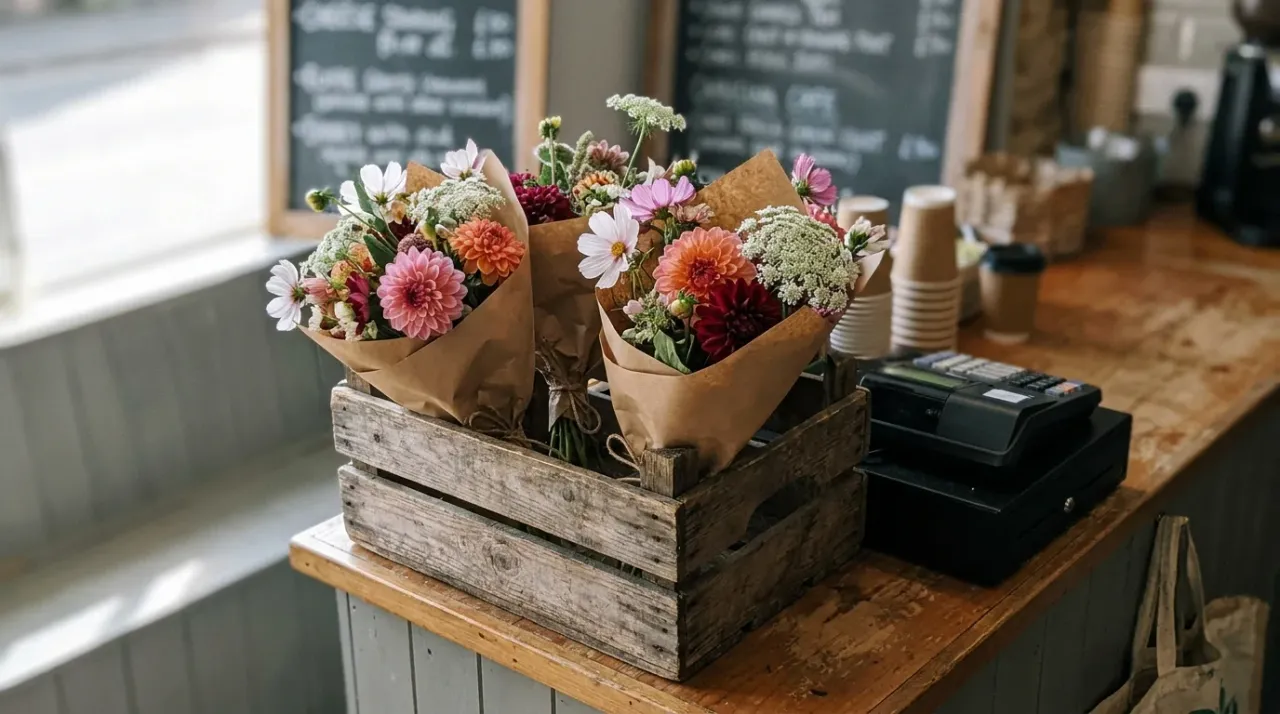
How do you sell bouquets through a shop or café? There are two ways to do it. Either the shop buys your bouquets outright at a wholesale price, or it takes them on sale or return (called consignment in the US) and pays you a share of each one that sells.
The difference is who pays for the bouquet that wilts. The FindHomegrown guide to where to sell flowers works through an example: if the shop keeps a third, a $15 bouquet pays the grower $10, but only after it sells, and every wilted bouquet is the grower's loss. It also notes that Virginia Cooperative Extension advises against consignment for cut flowers for that reason.
| Sold outright | An agreed price per bouquet, on delivery or by invoice | The shop | A shop that already knows it can sell them |
| Sale or return | A share of each bouquet, after it sells | You | A short trial with a new outlet |
The split is whatever you both agree. A third to the shop is an example, not a rule.
/ 02
Who to ask
Start where you already shop.
The best first outlet is a place where you are already a customer. They know your face, and you know their customers.
- Cafés and bakeries with a queue at the till.
- Farm shops and delis that make a point of local produce.
- Gift shops and village stores where people are already buying a card or a present.
Look for three things: steady footfall, an owner who cares where things come from, and a spot for a bucket that is out of direct sun and away from the fruit bowl and the radiator.
There is a second way to work with cafés and restaurants: flowers for their tables. Team Flower describes a weekly or fortnightly service of small vases, made with short stems and leftovers that would otherwise be composted. The writer charges $1 to $3 a table, plus a delivery fee, and swaps the vases for clean ones on each visit. If short stems are a regular loss on your plot, our post on why stems go to waste will show you how many you have to offer.
/ 03
What to agree
Write it down, even if it is one email.
FindHomegrown's advice is to agree in writing whether the shop buys outright or takes the flowers on consignment, and then to settle three more things.
- Who changes the water. Somebody has to, every day or two.
- How often you restock. It suggests twice a week keeps the buckets fresh.
- When and how you are paid. Weekly or monthly, and by what method.
Add two of your own. Agree the price on the label, so your bouquets cost the same in the shop as they do from you. And put your farm's name on every bouquet, because the customer who loves it should be able to find you.
If you are not sure what to charge, start with our guide to pricing cut flowers per stem, per bunch and per bucket, and read why local flowers are worth more, and how to say so before the conversation.
The bouquet sells the first week. The fresh water sells the second.
/ 04
The pitch
An email you can send today.
If the thought of asking makes your words dry up, you are in good company. Make it easy on yourself. Go in as a customer, leave a bouquet as a gift, and follow up in writing. Here is a version to adapt.
Subject: Local flowers for [shop name]?
Hello [name],
I grow cut flowers at [farm name], [number] miles from you, and I am a regular at [shop name]. I wondered whether you would like to try a bucket of my bouquets by the till for four weeks.
I would deliver fresh every [day], take away anything unsold, and keep the bucket and water clean. Each bouquet would be labelled and priced at £[price], and you would keep [share] of every one sold.
If it works, we carry on. If it does not, nothing is lost. Could I drop a bouquet in this week so you can see them?
Thank you, [your name and phone number]
Three things make this easy to say yes to. It is a short trial, not a commitment. You are offering to do the work. And they get to see the flowers before they decide.
/ 05
Making it pay
Do the sums before you say yes.
A shop bucket is only worth it if it pays for the flowers and the drive. Work it through before you agree a split. These figures are an illustration.
| Bouquets delivered | 10 |
| Shop price | £12 |
| Your share, if the shop keeps a third | £8 a bouquet |
| Bouquets sold | 8 |
| Paid to you | £64 |
| Unsold, your loss on sale or return | 2 bouquets |
Then ask what those ten bouquets would have earned elsewhere, and what two deliveries cost you in time and fuel. For comparison, FindHomegrown puts the wholesale price florists pay at about 25% to 50% of retail.
Count every week. Write down what you delivered, what sold and what came back, for each outlet. After a four-week trial you will know whether to carry on, change the day, or move from sale or return to selling outright.
Shops are one outlet among several. If you are weighing them up, see our guides to selling flowers to florists and selling at a farmers market.
/ 06
Questions
What growers ask.
What percentage do shops take for selling flowers? There is no fixed figure. It is whatever you agree. FindHomegrown's worked example has the shop keeping a third of the price.
What is sale or return? The shop displays your bouquets and pays you a share only when each one sells. Unsold flowers are your loss. It is called consignment in the US.
Should I sell outright or on sale or return? Selling outright is safer for the grower. Sale or return is easier for a shop to say yes to, so it suits a short trial before moving to an agreed wholesale price.
How often should I restock a shop bucket? FindHomegrown suggests twice a week keeps the buckets fresh.
How do I approach a café about selling my flowers? Go in as a customer, leave a bouquet as a gift, and follow up with a short email offering a four-week trial where you do the delivering and tidying.
From the field
Every outlet's orders in one place
BloomOS keeps your customers, orders and invoices alongside what you cut, so each shop's weekly order is easy to repeat and easy to look back on. Free to start on the Seedling plan.