/ 01
The problem
The compost heap keeps no records.
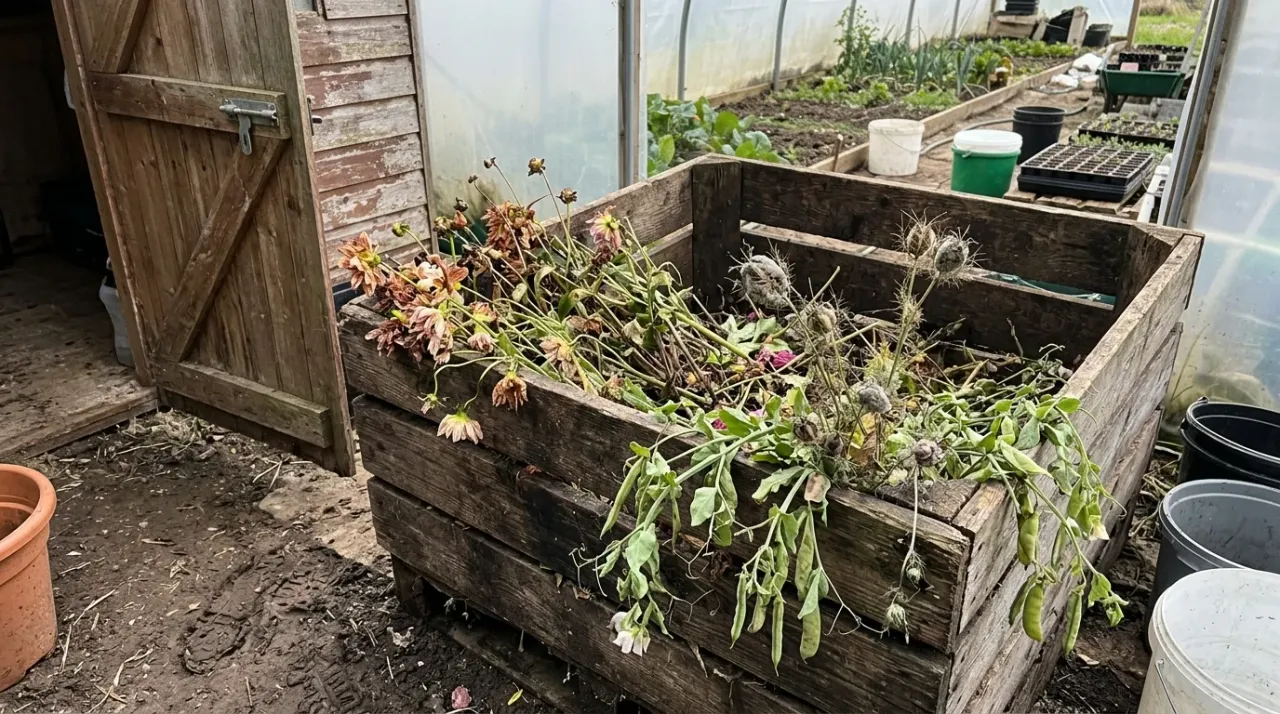
At the end of a busy week there is always a pile. Stems that went over in the cool room, a bucket that came in bent after the wind, the extra dahlias nobody ordered. They go on the compost and the week moves on.
The trouble is that the compost heap forgets. By the end of the season you know you wasted a lot, but not how much, not of what, and not why. Without the why, there is nothing to change.
Waste you can explain is a lesson. Waste you cannot explain is money on the compost heap.
/ 02
The nine reasons
Most waste has one of a few causes.
When stems come out of the cool room or the bucket for good, give them a reason. These nine cover almost everything on a small cut flower farm, and they are the reasons BloomOS asks for:
- Overstock. You cut more than you sold.
- Vase life expired. Stems sat too long and went over before they sold.
- Botrytis. Grey mould, often in damp, still weather or a crowded cool room.
- Frost damage. A cold night caught the beds or the buckets.
- Heat damage. Stems wilted or scorched in a hot spell.
- Pest damage. Earwigs, aphids, thrips, slugs and the rest.
- Physical damage. Snapped, bent or bruised in the field, the van or the cool room.
- Unsaleable grade. Too short or too marked to sell, even as seconds.
- Other. Anything that does not fit, with a note.
/ 03
What each tells you
Every reason points at a different fix.
The point of a reason is that it tells you where to look.
Overstock is a planning and selling problem, not a growing one. It usually means successions bunched up, or stems were cut before anyone had asked for them. Sending florists an availability list earlier in the week, or spacing sowings out, does more here than anything in the field.
Vase life expired points at the cool room and the order you sell in. Sell oldest first, cut each crop at the right stage, and keep the cool room cool and clean. If one variety keeps going over, it may not last as long as you are asking it to: check its vase life in the variety library, and our guide to how long cut flowers last covers the rest.
Botrytis is about air and hygiene: spacing, airflow in the tunnel, clean buckets and a cool room that is not packed solid.
Frost and heat damage are weather, but not only bad luck. A frost warning the evening before is time to fleece a bed or cut early. In a heatwave, cutting at first light and getting stems into water fast saves most of them.
Pest damage usually belongs to one bed or one crop. Note which, because next year that is the bed to watch first.
Physical damage is handling: bucket sizes, how stems travel in the van, how full the cool room gets.
Unsaleable grade often belongs to one variety or one bed that never quite performs. That is a growing decision for next season.
/ 04
The habit
Seconds when it happens, ten minutes a month.
Record waste when it happens, with the reason and a rough stem count. With the tool in your pocket it takes seconds. Then once a month, look at it by variety and by reason.
Three questions are enough:
- Which reason cost the most stems this month?
- Which variety shows up most often?
- What one change can I make next month because of it?
One change a month, from what the compost heap would have forgotten.
/ 05
End of season
Waste is part of what a crop costs.
When you review the season, put waste beside what each variety sold. A crop that sells well but wastes a third of what you cut is not as good as it looks, and a quiet performer with almost no waste may deserve more room next year.
/ 06
Questions
What growers ask.
Why do cut flowers go to waste on a flower farm?
Mostly for a handful of reasons: cutting more than you sell, stems going over before they sell, botrytis, frost or heat, pests, rough handling, and stems too short or marked to sell. Noting the reason each time shows which ones cost you most.
How much waste is normal for a cut flower farm?
There is no single right figure, because it changes with the crop, the weather and how you sell. Track your own and bring it down season on season rather than chasing someone else's number.
How do you stop botrytis in cut flowers?
Give plants space and airflow, keep buckets and the cool room clean, and don't pack the cool room solid. Grey mould loves damp, still air.
What can I do with flowers I can't sell?
Dry what you can, use the rest in your own arrangements or workshops, and compost what is left. Either way, note how many and why before they go.
How often should I look at flower farm waste?
Once a month is enough. Check which reason and which variety cost the most stems, and make one change because of it.
From the field
Know what went, and why.
Log waste in BloomOS in a few taps with one of nine reasons. On the Farm plan, Waste insights shows which varieties and which reasons cost you most.