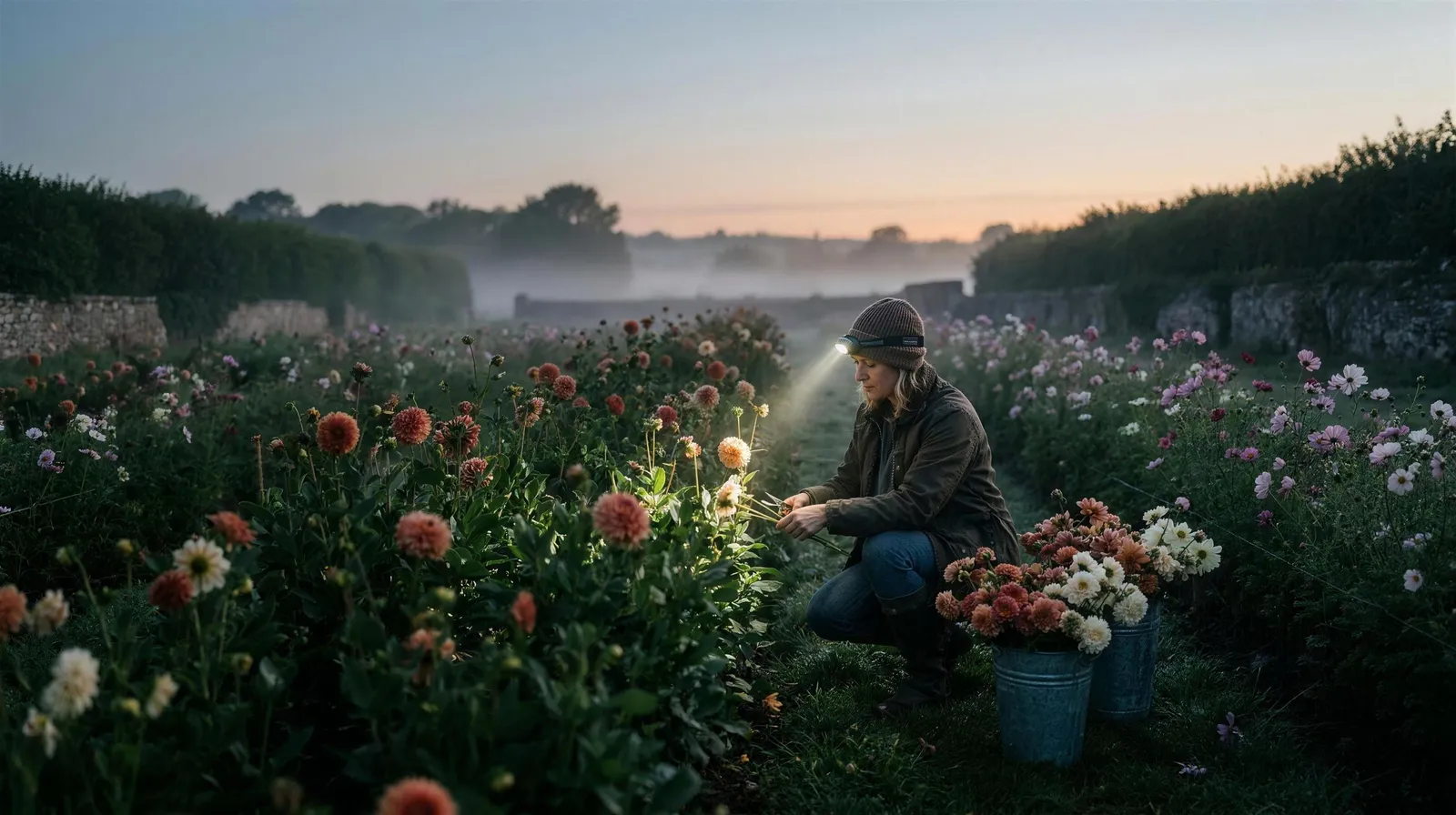
Start a flower farm
How to start a flower farm.
Everything we wish someone had told us before our first season: when to sow, what to grow, how much one bed gives, what to charge and who buys. Six steps, a year plan, and a free tool for every sum.
Written by the growers at Little Devon Flower Garden. Every tool on this page is free, with no sign-up.
- is enough to start selling
- 1 bedis enough to start selling
- stems from one 10 m bed of cosmos
- 3,960stems from one 10 m bed of cosmos
- frost-free in South West England
- 28 wksfrost-free in South West England
- for every tool on this page
- £0for every tool on this page
Before you start
Small, local and seasonal is the whole point.
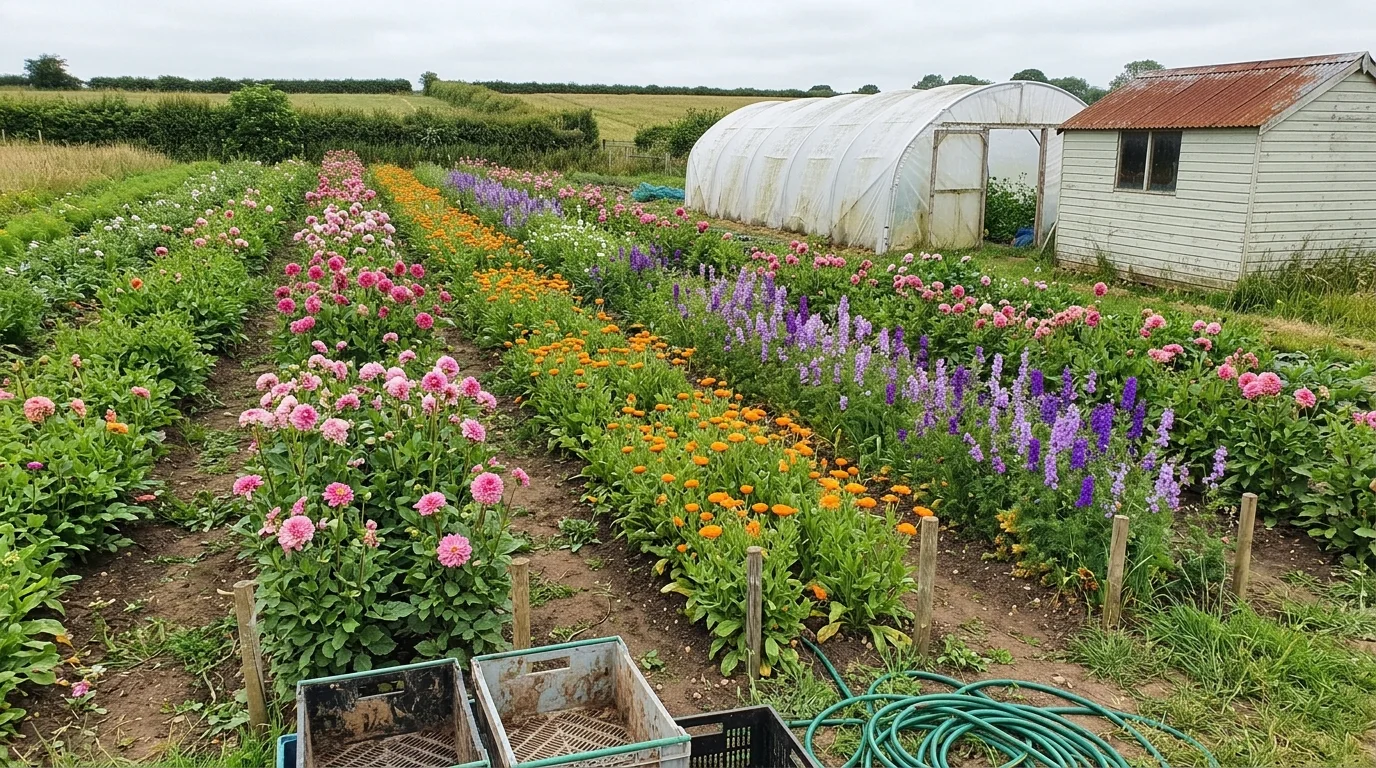
A cut flower farm grows flowers to be cut and sold: to florists, to wedding couples, at markets and at the farm gate. Most started as a few beds in a garden or an allotment, and plenty never get much bigger than a quarter of an acre. That's not a failure of ambition: a small farm cut hard and planned well can supply a stall, a handful of florists and a wedding most weekends.
What people buy from a local grower is what imported flowers can't give them: scent, wobbly stems, unusual colours, and flowers cut that morning. So the job is less about volume and more about rhythm: having something good to cut every week from spring to the first frost.
That rhythm comes from six decisions, in order. Get them roughly right and the rest is weather and hard work.
The six steps
From an empty patch to your first sale.
Each step has a free tool or an infographic further down the page.
- 1Know your frost datesYour last spring frost and first autumn frost decide when every tender crop goes out and when the season ends. Everything else is worked back from them.Go to step 1
- 2Choose what to growStart with reliable, productive cut-and-come-again flowers, plus a few things florists ask for. Ten varieties grown well beat forty grown badly.Go to step 2
- 3Work out your bedsPick a bed size and keep it the same everywhere. Then work out plants, seeds, stems and compost for each one.Go to step 3
- 4Plan your successionsSow little and often, so as one batch tires the next is coming into flower. This is the habit that fills July and September.Go to step 4
- 5Price it properlyCost every stem, including your own time, before you set a price. Then write your bunch recipes down and keep them the same.Go to step 5
- 6Find your customersFlorists, weddings, markets, the farm gate and subscriptions. Start local, keep records, and grow more of what sells.Go to step 6
Step 1 · Frost dates
The same flowers, very different seasons.
Your frost-free season can be twenty weeks or nearly thirty. It decides how many sowings you get and how long you cut.
South West England (about 28 weeks): last frost 15 Apr; first frost 1 Nov; frost-free from 15 April to 1 November.
North of England (about 20 weeks): last frost 15 May; first frost 1 Oct; frost-free from 15 May to 1 October.
Two example farms, from their average frost dates.
Try it
Find your own frost dates.
Type a US ZIP code, or pick a UK region or a USDA zone. Then carry the dates straight into the succession planner.
South West England: a rough average
Hardy annuals (sweet peas, ammi, snapdragons) can go out from about 18 Mar. Tender ones (dahlias, zinnias, cosmos) after 15 Apr.
These are averages. A hollow, a north slope or a few hundred feet of height can move your dates by a fortnight. Our guide to planning your season from frost dates shows how to work back from them.Step 2 · What to grow
Six flowers that earn their bed in year one.
Productive, forgiving and loved by florists. Grow these well and add one or two new things a year.
 CosmosThe workhorse. Sow under cover in April, plant out after the last frost, and it flowers for months if you cut it hard.
 ZinniasHeat-loving and bright, with long stems. Cut-and-come-again from midsummer to frost, and florists want the dusty colours.
 Sweet peasScent sells. Sow in autumn or late winter, grow up a net, and pick every other day or they stop flowering.
 SnapdragonsTall spikes for structure in a bunch. Sow early under cover; cut the main spike and side shoots follow.
 Single-stem sunflowersOne flower per plant, quick to grow, easy to sell. Sow every fortnight for a steady supply.
 DahliasThe late summer star. Tubers go in after the last frost and flower from July until the first frost blackens them.
Step 3 · Beds
How much one bed can give.
A rough season's worth of stems from one 10 metre bed. The spacing changes everything.
132 plants at 30 cm times 30 stems a plant, cut hard equals 3,960 stems is about 396 bunches of 10.
The plants per bed calculator's cosmos example. A rough season's worth: your own soil, weather and cutting will move it.
Try it
Work out any bed in 3D.
Pick a flower, slide the bed and the spacing, and see plants, seeds, stems, bunches and compost.
4 rows of 33 · about 11.0 plants a square metre
Cut-and-come-again. Pinch once at about 30 cm and keep cutting: the more you cut, the more it gives.Your numbers
Step 4 · Successions
Sow little and often.
One big sowing gives one glorious month and a long gap. Staggered sowings overlap, so there's always something to cut.
Sown at onceone glorious month, then a gap
Sown in turnssmaller waves, all season
An illustration of the idea, not measured data.
Three sowings of cosmos, one long season.
The third sowing, in late June, is the one everyone skips and the one that fills September.
Sowing one (early April, under cover): sown 5 April; growing from 5 April to 5 July; cutting from 5 July to 15 August.
Sowing two (mid May): sown 15 May; growing from 15 May to 15 August; cutting from 15 August to 15 September.
Sowing three (late June, the one everyone skips): sown 25 June; first frost; growing from 25 June to 1 September; cutting from 1 September to 1 November.
From the table above. The first frost is drawn at the start of November, as for a sheltered South West farm.
Step 5 · Price
What a stem really costs you.
Seed, compost and your own time all go in before profit. Price from the floor up, never from the supermarket down.
Direct cost from the profit per bed worked example; labour from the bunch timing below.
Your time is in every bunch.
5 min cut and condition plus 3 min bunch, sleeve, label equals £2 a bunch equals 20p a stem.
Assumptions, not a rule. Time yourself once and put your own minutes in.
Step 6 · Customers
Who buys from a small flower farm?
- Florists want reliable weekly availability and unusual colours. Send a list on the same day each week.
- Wedding couples book months ahead and pay well, but every date is a promise you have to keep.
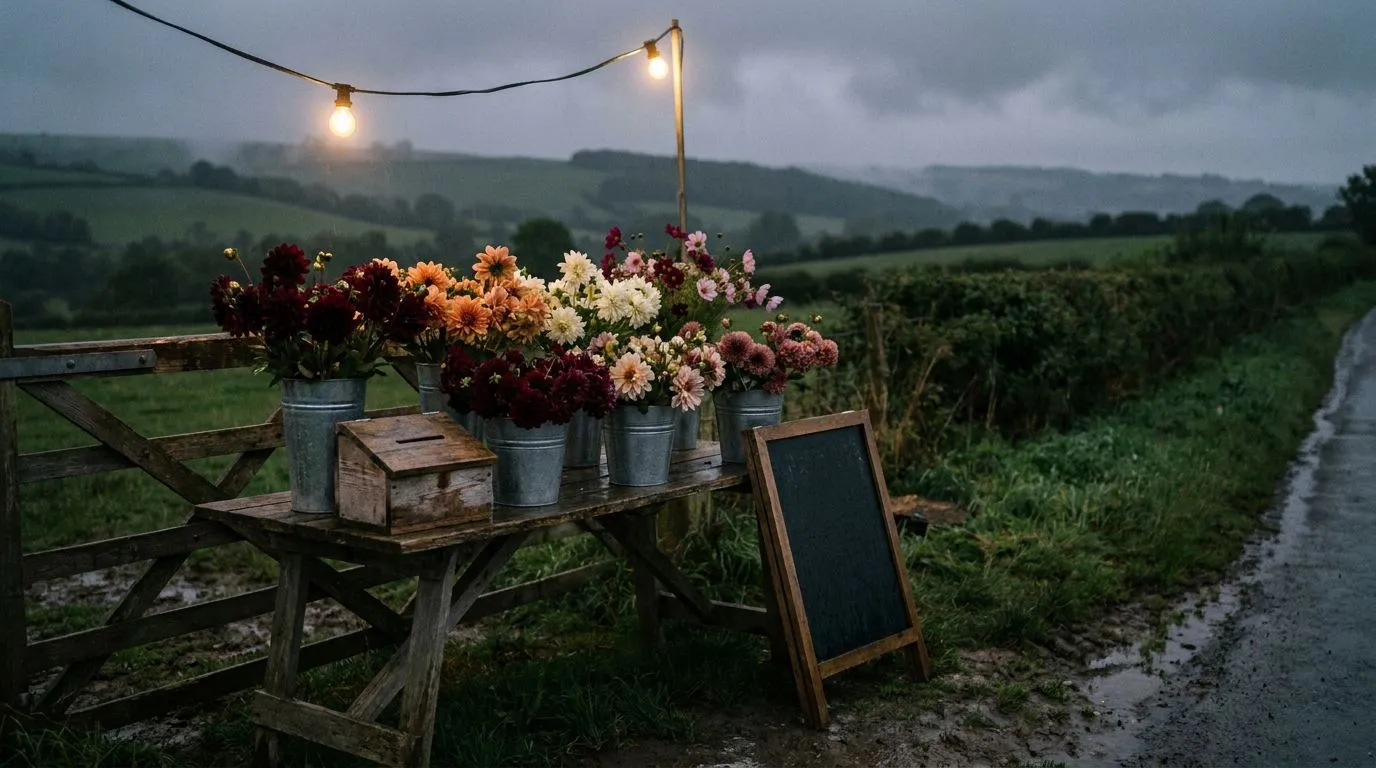
- Markets and the farm gate turn a glut into cash and teach you what people love.
- Subscriptions give you a known number of bunches every week, paid in advance.
Start with one or two, do them properly, and add more as the beds grow.
A year plan
Your first year, month by month.
For a farm in the south of England. Move everything a fortnight either way with your own frost dates; US growers can read it against their USDA zone.
January
Sweet peas under cover
Sow in deep modules in a cold greenhouse or on a cool windowsill, and pinch them when they have three pairs of leaves.
From the field
Ten things we wish we'd known in year one.
Learned the hard way at Little Devon, so you don't have to.
- 01 Tip
Start smaller than you think
Four beds cut properly will teach you more, and earn more, than twenty you can't keep up with.
- 02 Tip
Pick one bed size
Same width, same length everywhere. Netting, fleece, compost and every sum get simpler.
- 03 Tip
Cut in the cool of the morning
Stems are full of water at dawn. Get them into clean buckets in the shade straight away.
- 04 Tip
Cut hard to keep them coming
Cut-and-come-again flowers stop when they set seed. Pick even what you can't sell.
- 05 Tip
Grow what florists ask for
Ask two local florists what they struggle to buy. Grow that, and you have customers before you sow.
- 06 Tip
Write down every cut
Next year's plan comes from this year's stems. Without records, you're guessing again.
- 07 Tip
Price your time
Your hours are the cost most growers leave out. Put a wage in the sum, even if you don't pay it yet.
- 08 Tip
Foliage is half a bunch
Grow your own greens and fillers. They're cheap to grow and they turn ten stems into a bunch.
- 09 Tip
Keep the buckets spotless
Bacteria shorten vase life more than anything. Scrub buckets between every use.
- 10 Tip
The third sowing pays
The late June sowing feels pointless when the farm is at full roar. It's what you'll sell in September.
Keep reading
Guides for your first season.
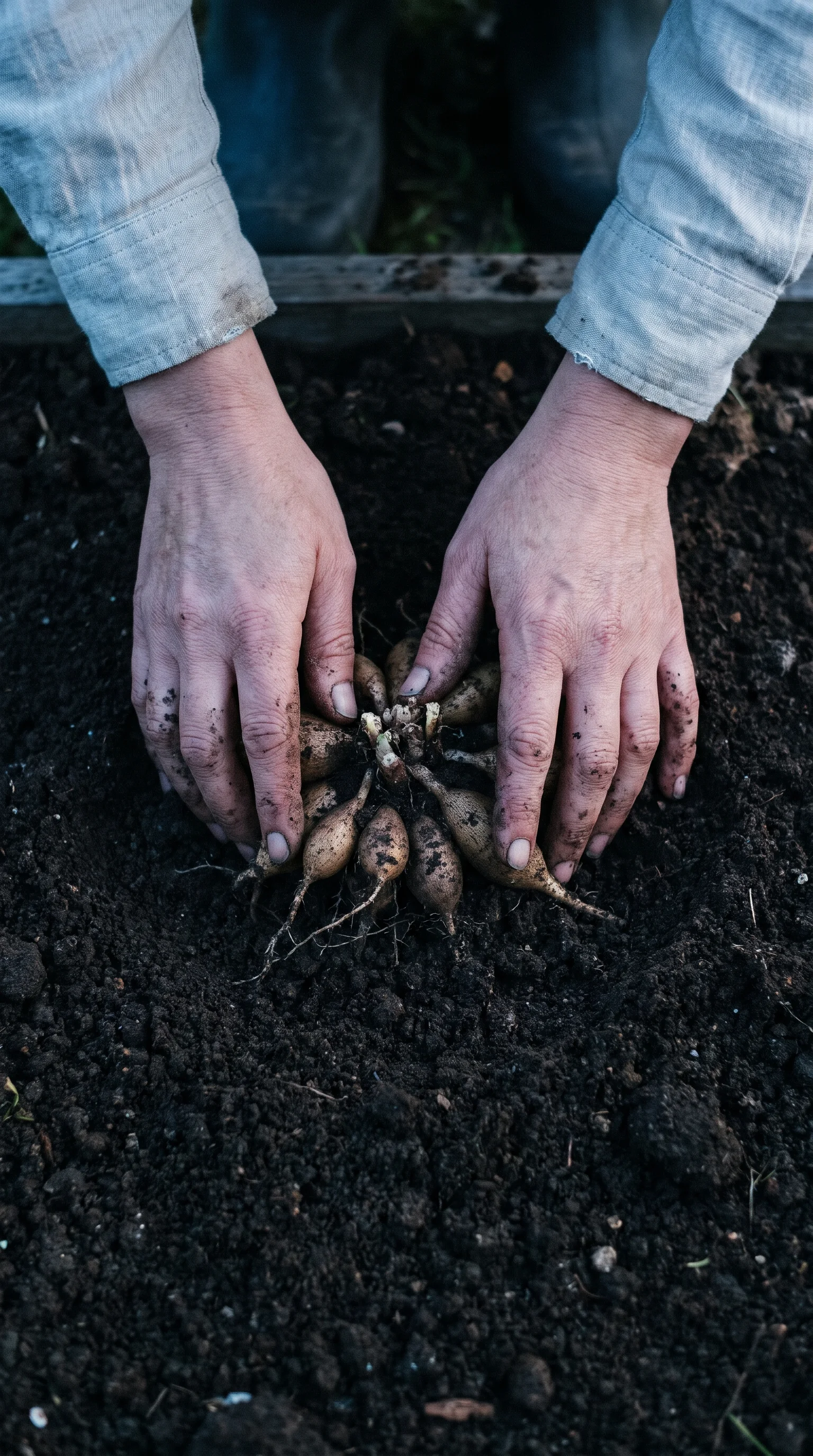 GrowingWhen to order dahlia tubersOrder dahlia tubers in winter for spring delivery. The sellers we checked open between August and March, send tubers out from January to April, and the popular cut varieties go first.
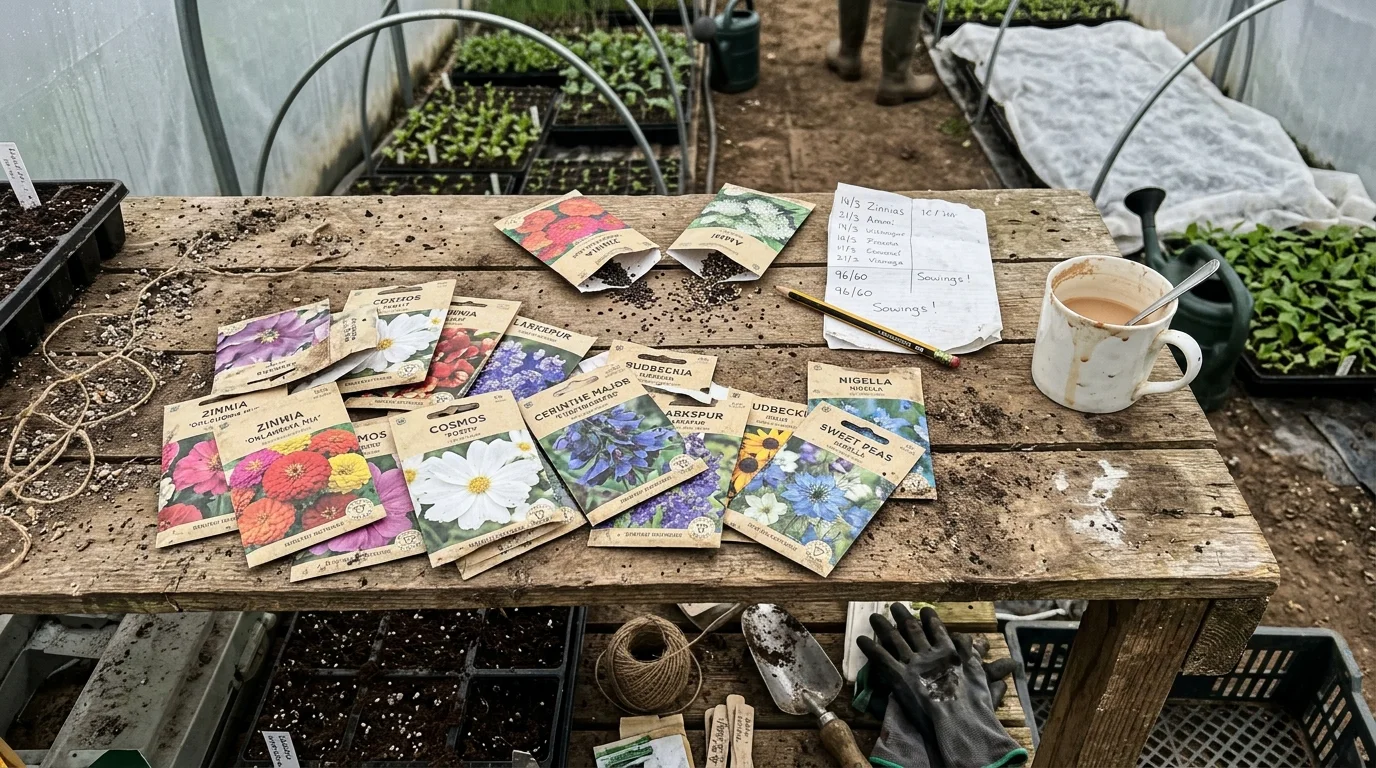 GrowingHow many seeds to buyWork back from the bed: plants per bed, times your sowings, divided by germination, plus a tenth spare. Then turn seeds into packets or grams, which vary more than you'd think.
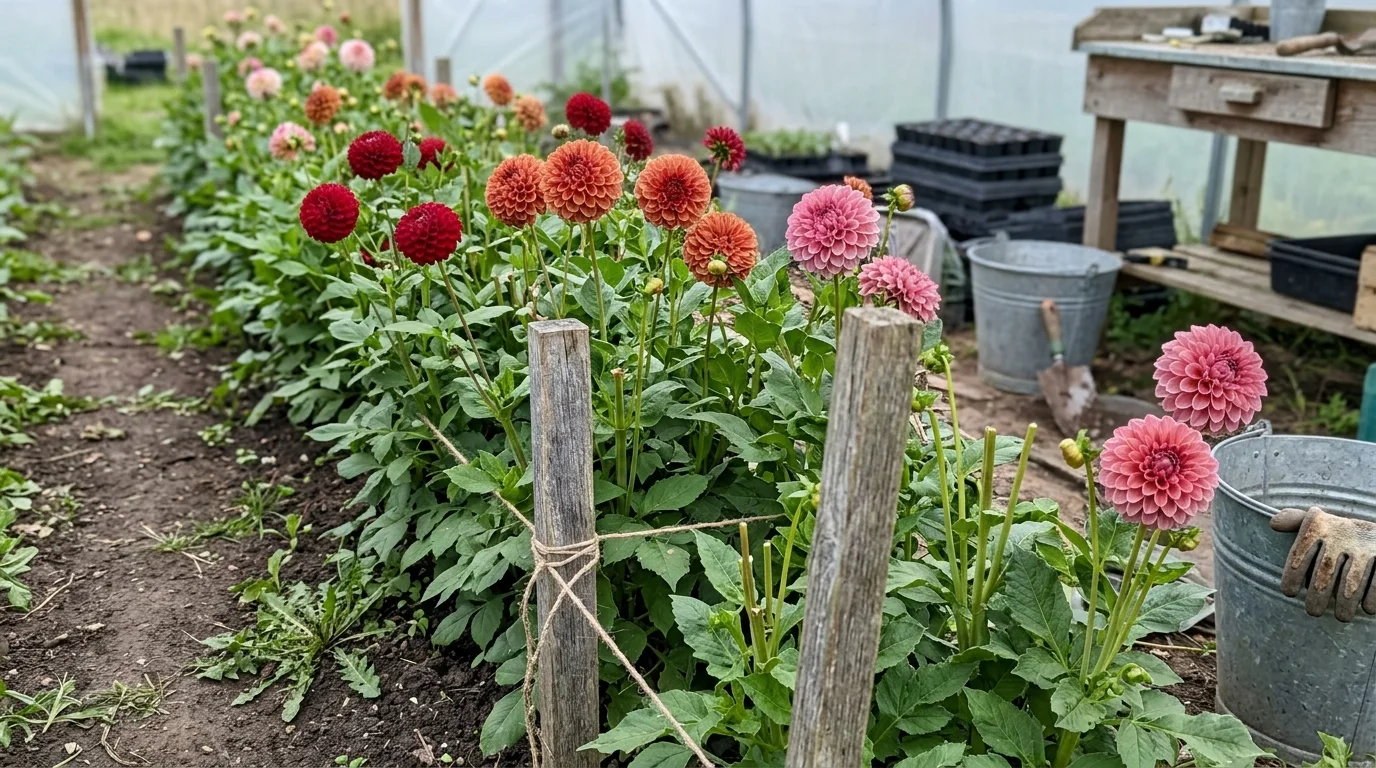 GrowingThe most productive dahlias for cuttingBall dahlias such as Cornel, Jomanda and Jowey Winnie are the names growers come back to for stem count. Here is a sourced shortlist, and a simple way to measure which varieties earn their space on your own plot.
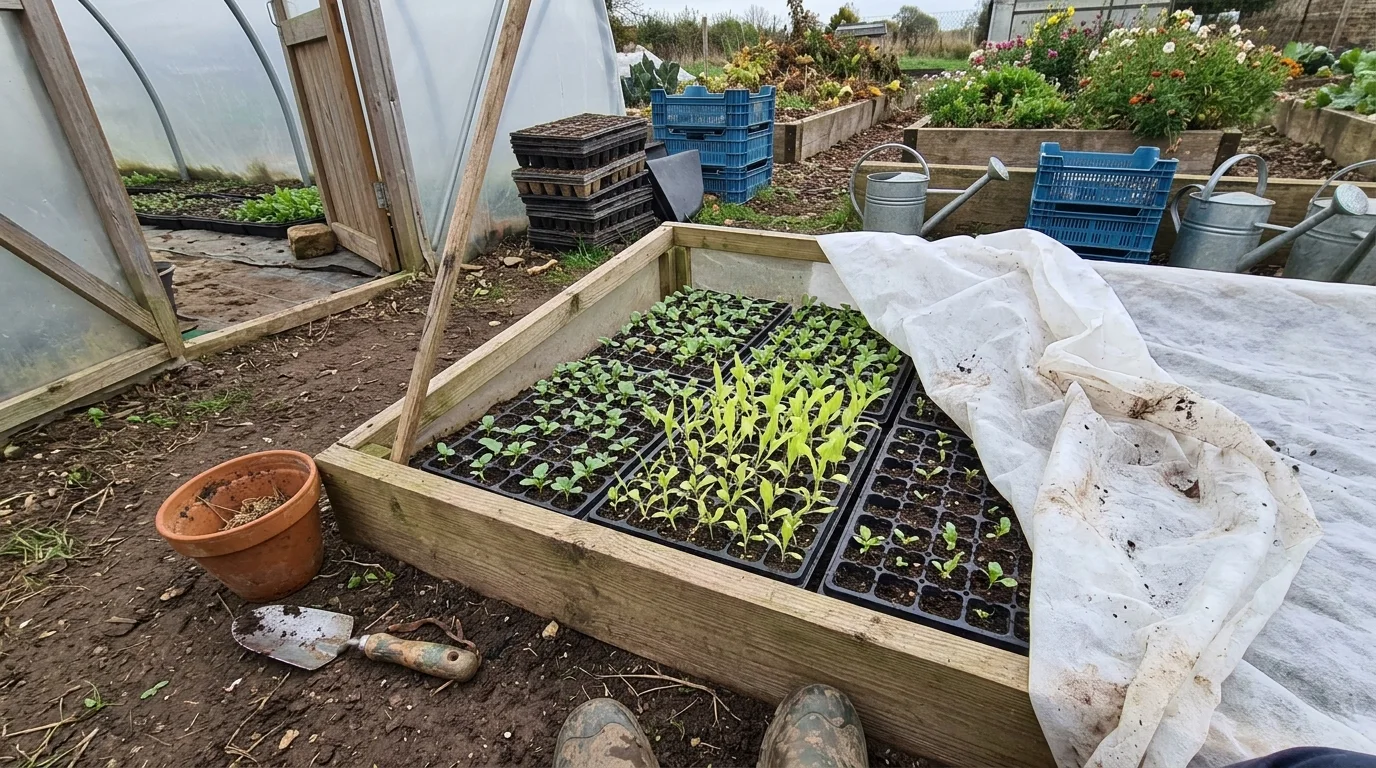 GrowingAutumn-sown hardy annuals: out now or under cover?Some autumn-sown annuals stand a British winter outdoors. Others need a cloche, fleece or a cold frame. Here is which is which, how much frost fleece really keeps off, and what to do with seedlings that have got ahead of you.
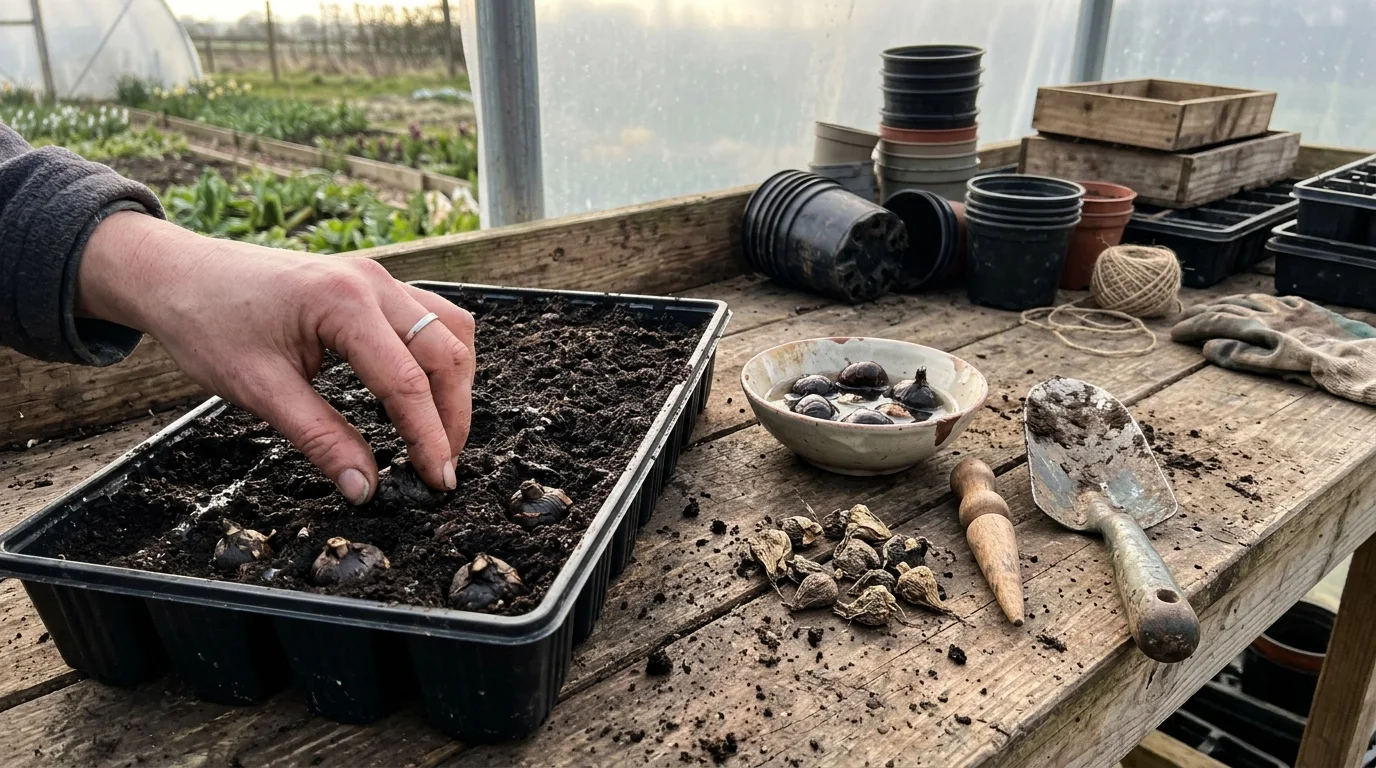 GrowingIs it too late to plant anemone corms?Anemone corms can go in from autumn right through to early spring. A late planting flowers by mid-spring instead of early spring. Soak for 3 to 4 hours, pre-sprout somewhere cool, and never let them freeze.
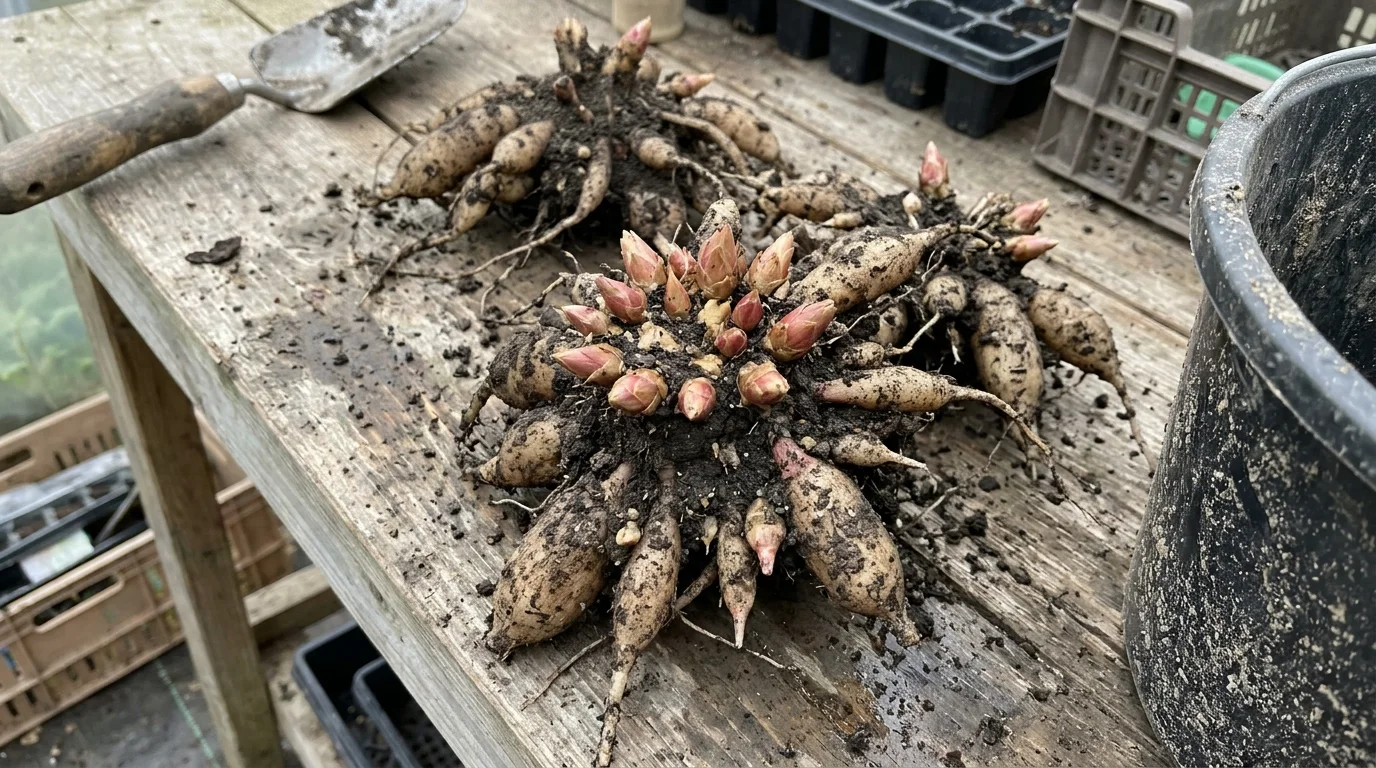 GrowingIs this gall? Dahlia crown gall vs leafy gallHealthy eyes are a few separate, pointed buds. Leafy gall is a dense cluster of short, distorted shoots. Crown gall is a knobbly swelling. Here is how to tell them apart at lifting time.
Questions
Starting a flower farm, in short.
How much land do you need to start a flower farm?
Less than most people think. Many growers start with a few beds in a garden or allotment, and a quarter of an acre of well-planned beds can supply a farm stall, a few florists and some weddings.
What are the easiest cut flowers to start with?
Cosmos, zinnias, sweet peas, snapdragons, single-stem sunflowers and dahlias are productive, reliable and well loved by florists and customers. Add foliage and fillers such as ammi to turn stems into bunches.
How much does it cost to start a flower farm?
It can start very small: seed, compost, a few buckets and some netting for a handful of beds. The biggest cost most new growers leave out is their own time, so price it in from the start.
Is flower farming profitable?
It can be, on a small scale, when you price every stem including your own time and grow what sells. Our guide to flower farm profit works through the real numbers, bed by bed.
When should I start planning?
Autumn. Hardy annuals sown in September flower earlier, and the best seed and dahlia tubers sell out over winter. Plan the beds in November and order in December.
Do I need software to start?
Not on day one. A notebook works for the first beds. Software earns its place once you're logging cuts, taking orders and planning successions across many beds, and BloomOS is free to start when you get there.
Keep proper records from day one.
BloomOS is free to start: log every cut, plan your successions and invoice your first customers from your phone.
Try now for FREE