/ 01
The short answer
It depends on the plant, and on your winter.
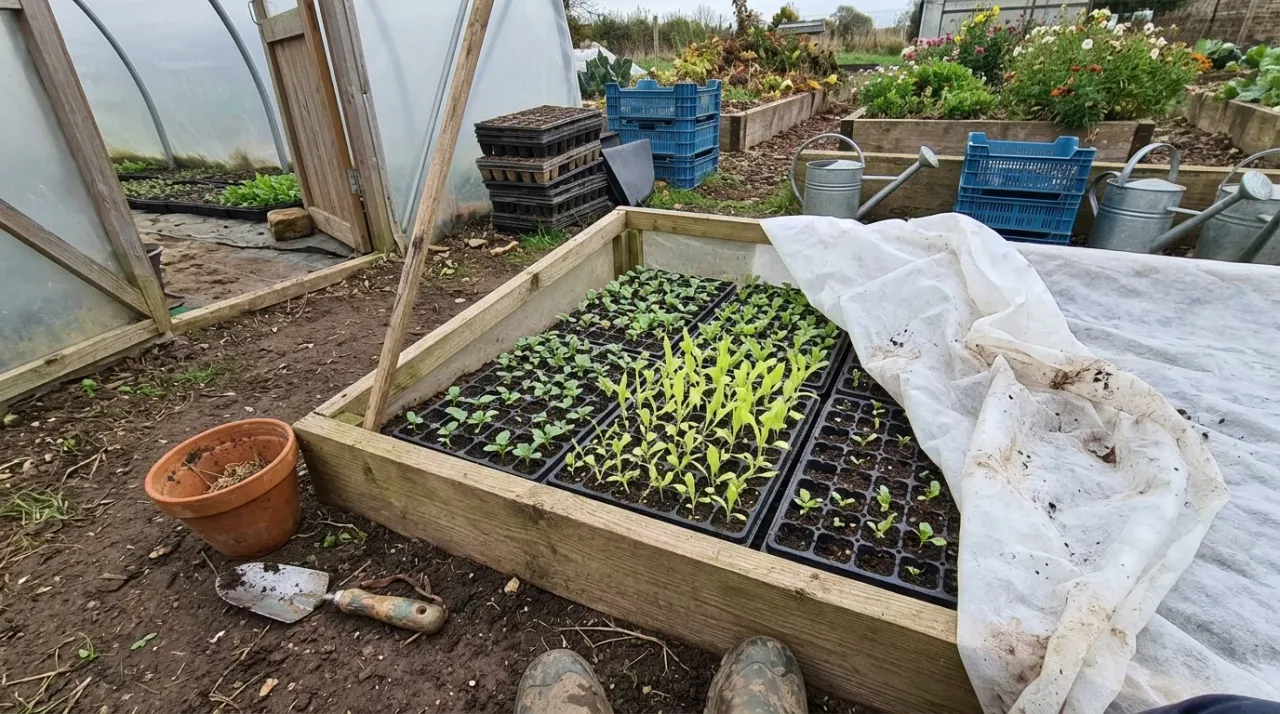
Can you plant out autumn-sown hardy annuals now? The tough ones, yes, in a mild area with fleece to hand. The RHS sorts hardy annuals for autumn sowing into two groups: those that normally need no protection, and those that need some protection from frost even in milder parts of the UK. Anything started under cover, it says, should be hardened off and overwintered in a cold frame or unheated glasshouse, then planted out the following spring.
The reward for getting them through is earlier flowers. The RHS says autumn-sown hardy annuals flower earlier than those sown in spring.
| Normally no protection | Ammi majus, cornflower, larkspur, nigella, calendula, honesty, opium and Shirley poppies, quaking grass | May still need cloches or fleece in northern parts of the UK, or in the south in a harsh winter |
| Some protection needed | Sweet peas, cerinthe, California poppy, toadflax | Cloches and fleece, even in milder areas; in colder parts sow in pots under glass |
| Sown under cover | Any of the above started in trays or pots | Harden off, overwinter in a cold frame or unheated glasshouse, plant out in spring |
/ 02
Plant out or hold
Three questions for every tray.
Before a tray goes out, ask three things.
Is it on the tough list? Cornflowers, larkspur, nigella and ammi are the classic overwintering cut flowers. Sweet peas and cerinthe are hardy, but the RHS puts them in the group that needs cover.
How sturdy is the plant? Many growers find that small, stocky plants ride out cold better than tall, soft ones that have been kept warm. The RHS method is to harden plants off before they go into a cold frame, not to move them straight from warmth to cold.
What is the bed like? A raised, free-draining bed is a much safer winter home than a low, wet one. If water stood on that bed last January, hold the plants back.
| Tough-list plant, sturdy, free-draining bed, mild area | Plant out, and keep fleece ready for hard frosts |
| Tough-list plant, cold or exposed site | Plant under a cloche or low tunnel, or hold in a cold frame until spring |
| Plant from the protection group | Keep in pots in a cold frame or unheated glasshouse; plant out in spring |
| Not on either list, such as snapdragons | Treat as needing cover |
Snapdragons come up in this question more than anything else. They are not on either RHS list. Growers do carry autumn-sown plants through winter, but under cover: a cold frame, an unheated greenhouse, a polytunnel or a low tunnel.
/ 03
Protection
What fleece actually does.
The RHS says heavier grades of horticultural fleece give about 2°C of protection from frost. That is worth having on a night of -2°C. It is not a heated greenhouse, and it will not save a tender plant from -6°C on its own.
Layer it. A low tunnel or cloche with fleece laid over the plants inside gives two layers of still air.
Weigh down every edge. Fleece that lifts in the wind protects nothing, and it tears quickly once it starts to flap.
Let air in on mild days. The RHS lists powdery mildew, slugs, snails and aphids among the problems annuals suffer. All of them enjoy a closed, damp cover. Open the ends when the weather allows, and check underneath for slugs.
Put support netting in at planting. Fix it low, on short stakes inside the hoops, so the cover can come on and off without disturbing it. Raise the net as the plants grow in spring.
Fleece is worth about two degrees. Plan for the night that needs four.
Knowing which night that is, for which bed, is the subject of our post on frost alerts for your beds.
/ 04
When seedlings get ahead
Too big, too early, or not up at all.
Plants outgrowing their cells. Pot them on. A plant held root-bound in a small cell for four months rarely recovers its vigour. If space is the problem, it is better to overwinter fewer plants well.
Plants sending up flower buds in autumn. This usually means an early sowing, a warm spell, or both. Most growers pinch the flowering stem out so the plant puts its strength into roots and side shoots. If you have seed left, sow a spring batch as a back-up.
Self-sown seedlings in the wrong bed. Seedlings that have chosen their own spot are often sturdy. Thin them so each has room, and move any that will crowd the crop you planted there.
Seed that has not come up. Old seed is often the cause, so sow fresh if you can. The RHS sows hardy annuals under cover at 18°C, dropping to 15°C after germination. An unheated greenhouse in November is well below that.
Is it too late to sow again? The RHS window for autumn sowing is September and October, when the soil is moist. After that, wait. Hardy annuals can be sown again from early spring, and our succession planting calculator will space the sowings for you. For sweet peas, which keep their own timetable, see when to sow sweet peas for cutting.
/ 05
Next autumn
Write down what survived.
Every plot is different. A variety that sails through winter in Cornwall can struggle in Manchester, and the only guide that fits your beds is your own record. It does not need to be long.
- Sowing date and where the tray was kept.
- Planting-out date and which bed.
- What cover it had, and when it went on.
- The coldest night you recorded.
- How many plants made it, and the date of the first cut.
Next September those five lines tell you what to sow, when, and what to leave until spring. If you are planning the whole year at once, start with planning your season from your frost dates and our guide to succession planting for cut flowers.
/ 06
Questions
What growers ask.
Can I plant out autumn-sown hardy annuals in November? The tough ones, such as cornflowers, larkspur, nigella and ammi, can go out in a mild area with fleece ready. The RHS advises overwintering plants raised under cover in a cold frame or unheated glasshouse and planting them out in spring.
Which hardy annuals survive winter outside in the UK? The RHS lists ammi, cornflower, larkspur, nigella, calendula, honesty and poppies as normally needing no protection, though they may need it in the north or in a harsh winter.
How much frost protection does fleece give? About 2°C for the heavier grades, according to the RHS.
Can snapdragons be overwintered? Growers do overwinter autumn-sown snapdragons, but under cover. They are not on the RHS lists of hardy annuals for autumn sowing, so treat them as needing protection.
Is it too late to sow hardy annuals in autumn? The RHS sows them in September and October. After that, wait and sow from early spring.
From the field
Know which night the fleece goes on
BloomOS sends frost alerts linked to the beds and crops you actually planted, so you know which night the young plants need covering. Free to start on the Seedling plan.