/ 01
The problem
A forecast does not know what is in bed 4.
The weather app on your phone knows the temperature for your postcode. It does not know that you planted out sixty dahlias on Saturday, that the zinnia seedlings are still hardening off by the shed, or that the bottom bed sits in a dip where the cold air settles.
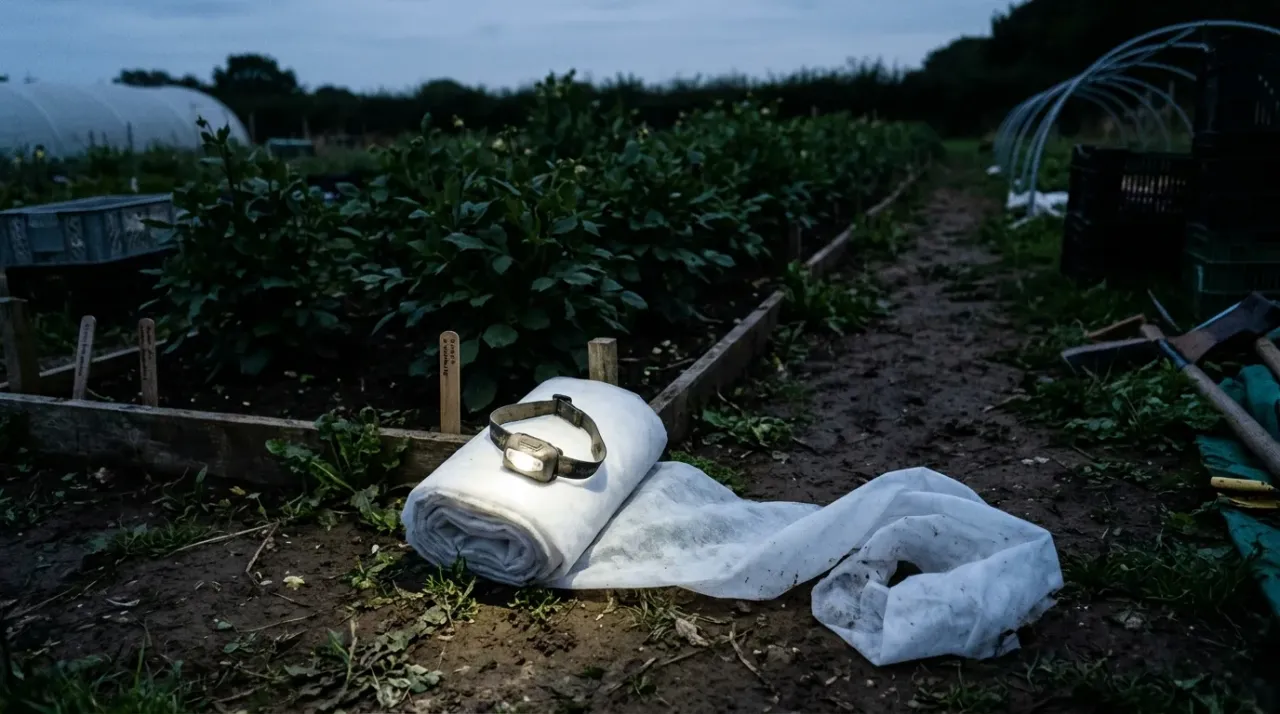
So a frost warning lands as general worry. You check the forecast at 9pm, then again at 10pm, then go out with a head torch and a roll of fleece because you cannot remember which beds actually matter tonight.
The fix is not a better forecast. It is knowing, before the cold night comes, which of your beds are at risk and what each one needs.
A frost warning is only useful if you already know which beds it is talking about.
/ 02
Know your beds
Sort your crops into three frost groups.
Do this once at the start of each season, and update it as beds change. It takes ten minutes with your bed map and saves a lot of 10pm guesswork.
| Tender: dahlia, zinnia, cosmos, celosia, sunflower, gomphrena | Blackens leaves and flowers, can kill young plants outright | Cover, or cut everything worth selling first |
| In between: young transplants of anything, seedlings hardening off, crops under first flower | Checks growth, scorches soft new leaves | Bring trays in, fleece new plantings |
| Hardy: autumn-sown sweet peas, cornflower, ammi, larkspur, and most perennials and shrubs grown for foliage | Usually shrugs it off once established | Leave them, unless they are tiny seedlings |
Then mark your frost pockets. Cold air runs downhill and pools, so beds at the bottom of a slope, against a solid fence or hedge at the low end of a field, or in a hollow tend to get colder than the rest. If you have ever found frost on one bed and not the next, write that down. It will happen again.
And note your planting dates. A tender crop is most at risk in the fortnight after it goes out. That is the window an alert matters most.
/ 03
Alert night
The frost night checklist.
When the alert comes, work through the list in this order. The aim is to be done before dark, not out in it.
Save this: the frost night checklist
- Check which beds are at risk. Tender crops first, then new plantings, then anything in a frost pocket.
- Cut what is ready. If a frost is likely to finish a tender bed, cut every sellable stem in the afternoon. Stems in a bucket in the cool are worth more than blackened ones in the bed.
- Bring in seedlings. Trays hardening off go back under cover.
- Fleece the tender beds. Lay fleece over hoops if you can, so it does not touch the leaves, and weigh the edges down so the wind does not lift it.
- Water earlier in the day if the soil is dry. Moist soil holds and releases more warmth overnight than dry soil. Do not water late in the evening onto the leaves.
- Close the tunnel and greenhouse doors before the sun goes off them.
- Note it down. Which beds you covered, what you cut, and in the morning, what was damaged. Next year's planting dates come from these notes.
In the morning, leave the fleece on until the frost has lifted, then check the tender beds. Frost damage often looks worse on the first day, so give a plant a day or two before deciding it is finished.
/ 04
Spring and autumn
The two frosts that catch growers out.
Most frost losses on a cut flower farm come at the two ends of the season, and they catch growers out for opposite reasons.
The late spring frost. In spring the risk is impatience. A warm week in May makes everyone want to plant out the dahlias and zinnias, and then a clear, still night arrives. Planting tender crops out in stages, rather than all at once, means one cold night cannot take the whole lot. Our guide to succession planting covers how to stagger sowings and plantings.
The first autumn frost. In autumn the risk is the opposite: the beds are still full and still selling, and the first frost ends the season for dahlias, zinnias and cosmos in a single night. When an autumn frost is forecast, cut hard the day before. Many growers then lift dahlia tubers once the first frost has blackened the foliage. Either way, this is the frost that closes the books on your summer crops, so it is also the right moment for an end-of-season review.
The first autumn frost is the end of your dahlia season. Cut the day before, not the morning after.
/ 05
Heat and drought
The other weather that costs stems.
Frost gets the attention, but heat and dry spells cost growers stems too.
Heat. On a hot day, flowers open faster in the bed and wilt faster in the bucket. Cut early, get stems straight into water in the shade, and expect a crop like sweet peas to go over quickly. Vase life is decided on the farm, as we explain in how long cut flowers last, and heat is one of the biggest things working against it.
Drought. A dry fortnight hits shallow-rooted annuals and new plantings first. Knowing which beds were planted most recently tells you where the water has to go first.
/ 06
In BloomOS
Alerts for your farm, with your beds right there.
We did not build a weather dashboard. BloomOS checks the forecast for your farm every morning and sends an alert when it matters.
Frost, heat and heavy rain. A frost or hard frost alert, a heat alert before the hottest days and a warning before heavy rain, each with what to do about it. You set the temperature that counts as a frost on your farm, so if your beds sit in a frost pocket you can be warned before the forecast says zero.
Your beds one tap away. The alert tells you the cold is coming. Your bed map in BloomOS shows what is planted in each bed and when it went out, so working through the checklist above takes minutes, not a walk round with a head torch.
On any phone. BloomOS runs in the browser on any phone and can be added to your home screen like an app. A native iPhone and Apple Watch app is coming to the App Store.
The point is the same as the checklist above: fewer evenings spent wondering which beds matter, and more time to cut, cover and get indoors before dark. If you are new to bed-by-bed records, our guide to logging a cut in 30 seconds is a good place to start, because the same habit of noting things at the bed makes every frost note more useful next year.
From the field
Know before the frost does.
BloomOS sends frost, heat and heavy rain alerts for your farm, with your beds and what is planted in them one tap away. Free to start, no card needed.