/ 01
The short answer
Firm is good. Everything else is a message.
If your dahlia tubers are rotting in storage, remove every soft or smelly one straight away, before the rot spreads to its neighbours. The American Dahlia Society advises inspecting stored tubers monthly and throwing away any that show signs of rotting. Shrivelling means the store is too dry; sprouting in midwinter means it is too warm.
Most stored tubers come through. The American Dahlia Society says good, mature tubers from healthy plants generally keep well, and that any of the usual storage methods should give 90 to 95% success. The monthly check is how you stay in that range rather than opening a box of mush in April.
| Soft, wet, smelly tuber | Rot | Cut back to sound tissue, or throw it away |
| Brown or rusty inside when cut | Rot starting | Cut towards the crown; keep it only if a clean section with crown remains |
| Shrivelled, wrinkled skin | Store too dry | Damper medium, closed box or bag |
| Sprouts and roots in December or January | Store too warm | Move somewhere cooler |
| Mushy after a cold snap | Frozen | Throw away; freezing ruins tubers (ADS) |
| Mould on the surface, tuber still firm | Damp in the box | Wipe off, let it dry, and check inside by cutting the end |
/ 02
Soft and smelly
Rot, and how far it has gone.
A soft tuber is the one to act on today. Rot spreads from tuber to tuber where they touch, and the American Dahlia Society notes that some growers store tubers so they do not touch at all for that reason.
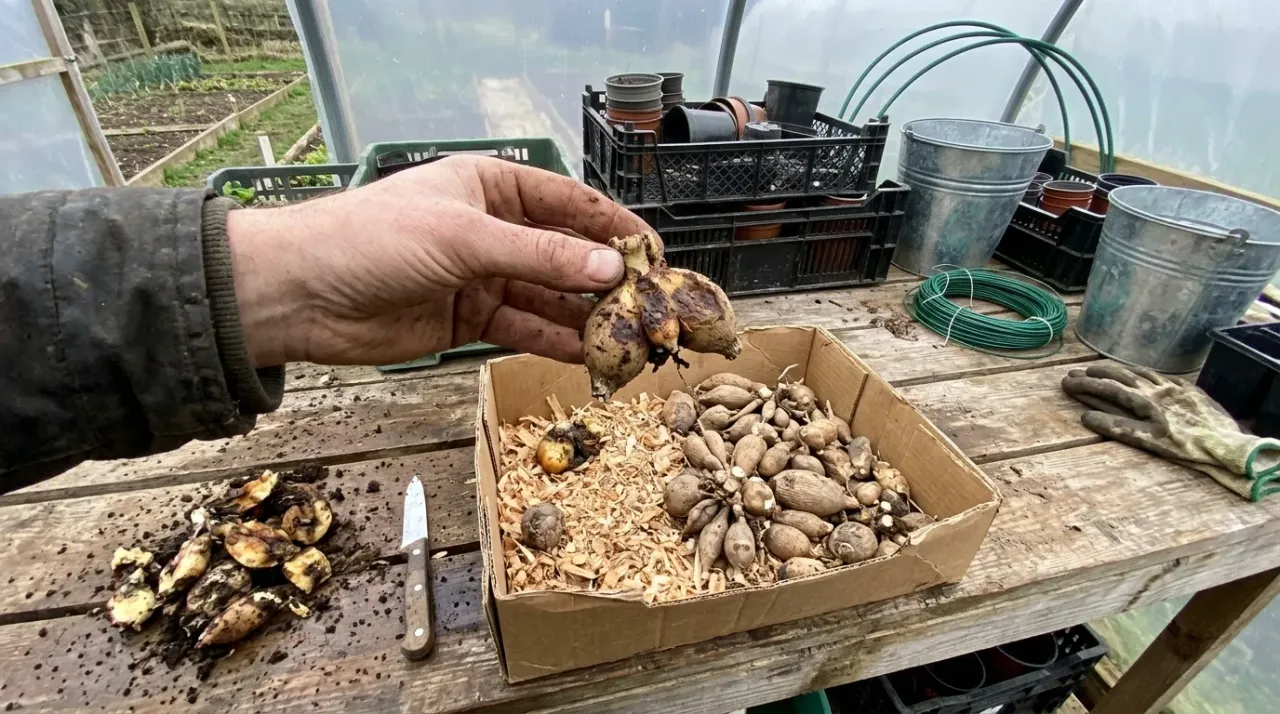
Not every soft spot means the whole tuber is lost. The American Dahlia Society's method is to cut the end of the tuber: any brown or rusty colour in the middle, or part of the way out, indicates rot. Keep cutting back towards the crown. If you reach a clear section that still includes the crown, the tuber should be viable.
- Take it out of the box and away from the others.
- Cut from the far end towards the crown with a clean knife.
- Stop when the flesh is clean and pale. If that point still has crown attached, let the cut surface dry for a day and put it back in fresh medium.
- If the rot reaches the crown, throw it away. A tuber without a sound crown and eye will not make a plant.
- Clean the knife. The American Dahlia Society advises sterilising cutting tools with one part bleach to ten parts water.
One soft tuber in December is a small job. Left in the box until March, it is a crate of them.
/ 03
Shrivelled
The store is too dry.
Wrinkled, papery tubers have lost moisture. The American Dahlia Society explains that storage works when moisture can pass between the tubers and the storage medium, while the container keeps that moisture in. If it escapes, the tubers shrivel.
Close the box or bag. The American Dahlia Society says the drier your winter air and the thinner the tubers, the more airtight you want the bags.
Use a medium that holds moisture. Vermiculite, slightly damp compost or wood shavings all work. It notes some growers warn that wood chips can draw moisture from tubers.
Get them off concrete. Concrete draws moisture out of tubers, it warns, which is why they should never be dried on it either.
Do not soak them. Adding water to the box risks rot, which is a bigger problem than wrinkles. In early spring the American Dahlia Society suggests just a teaspoon of water per quart (about a litre) of bag space, a week to 10 days before taking them out.
| Sign | Rot and mould | Shrivelling | Early sprouts | Mushy after frost |
| Fix | Drier medium, more air | Damper medium, closed box | Cooler spot | Insulate, or move them |
| Target | Just damp | Just damp | 4 to 7°C | Never below freezing |
/ 04
Sprouting early
The store is too warm.
Eyes swelling in March are welcome. Long pale shoots and new roots in December are not. The American Dahlia Society says warm temperatures prompt tubers to sprout and grow feeder roots too soon, and also encourage the microorganisms and fungi that rot them. Most growers, it says, aim for a nearly constant 4 to 7°C (40 to 45°F).
Move sprouting tubers to the coldest frost-free place you have. Do not cut the sprouts off unless they are rotting; a tuber needs its eyes. If they have sprouted badly and you have frost-free space with good light, potting them up early is an option some growers take rather than fighting them back into dormancy.
Early sprouts are the store telling you it is too warm. Listen in December and you will not be fighting leggy shoots in February.
/ 05
Prevention
Most rot starts at lifting.
The RHS advises storing only dried, healthy, undamaged tubers, and warns that cut or bruised tubers can rot in storage. Its growing guide suggests leaving clumps intact and splitting them in spring, because wounds can be an entry point for rot. The American Dahlia Society adds a simple test when dividing: throw away any tuber that floats in a dip, because it will not keep.
Your best defences, in order:
- Lift carefully, forking wide so tubers are not speared or bruised.
- Drain the stems by drying clumps upside down.
- Dry long enough, but not too long: about a day for small divisions, 24 to 36 hours for larger ones, says the American Dahlia Society.
- Keep the store cool and steady, at 4 to 7°C.
- Check on the same date every month, until planting time.
Our full guide to storing dahlia tubers covers lifting, dividing and boxing up. If you are still deciding whether to wash yours, see should you wash dahlia tubers, and if something on a crown looks like a strange lump or a mass of tiny shoots rather than rot, read crown gall and leafy gall.
/ 06
Questions
What growers ask.
Why are my dahlia tubers rotting in storage? Usually because of bruising at lifting, water left in the stems, or a store that is too warm or wet. The American Dahlia Society says warmth encourages the fungi that rot tubers.
Can you save a dahlia tuber that is going soft? Sometimes. Cut from the end towards the crown. If you reach clean flesh with the crown still attached, the American Dahlia Society says the tuber should be viable.
Why are my dahlia tubers shrivelling? The store is too dry. Use a medium that holds moisture and a closed box or bag, and keep tubers off concrete.
Is it bad if dahlia tubers sprout in storage? In late winter it is normal. In December or January it means the store is too warm; move them somewhere cooler, around 4 to 7°C.
How often should I check stored dahlia tubers? Once a month, says the American Dahlia Society, throwing away anything rotting before it spreads.
From the field
Know which varieties are worth the space
BloomOS logs every cut by variety and bed, even with no signal, so you know which dahlias deserve a place in the store before you box them up. The Seedling plan is free for ever.