/ 01
Why winter
Next July is decided now.
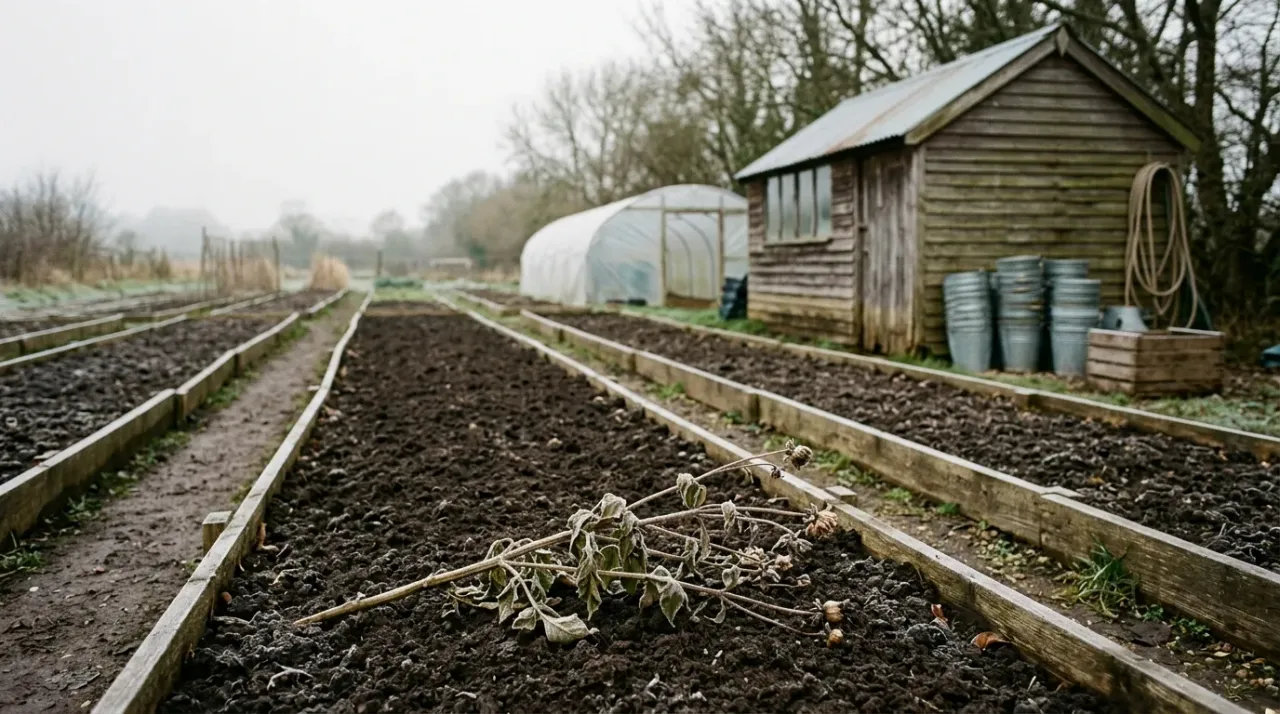
The first frost blackens the dahlias and, for a week or two, it feels like the season is over. It is not. It has just changed shape.
Winter is when you can see the farm properly: bare beds, broken hoops, the path that floods. It is when you have time to think about the numbers instead of chasing them. And it is when the bulbs, the seed order and the bed preparation that make next season possible have to happen, because spring will not wait for you to catch up.
Here are the twelve jobs we would not skip, roughly in the order they come round. Timings are a guide: a mild Cornish winter and a hard one in the Pennines are different seasons, so go by your own ground and weather.
The beds rest in winter. The grower does not, but at least nobody is waiting at the gate for an order.
/ 02
Autumn into winter
Close the season properly.
1. Do the end-of-season review while it is fresh. Before the details fade, sit down with the cut log and the sales. Which beds paid? Which varieties sold out, and which went to the compost heap? Our 10-minute end-of-season review walks through it.
2. Lift or protect the dahlias. After frost has blackened the foliage, cut dahlias down. On cold or wet ground, many growers lift the tubers, let them dry, then store them somewhere cool and frost-free. On well-drained ground in milder areas, others leave them in with a thick mulch and accept some losses. Label every clump before it leaves the bed: an unlabelled tuber is a lottery ticket next May.
3. Plant tulips. Tulips go in late, often in November, once the soil has cooled. Many cut flower growers plant them close together in crates or beds and treat them as a single crop, pulling the whole bulb when they cut. Triumph tulips such as Gavota and First Class are a reliable place to start.
4. Clear, compost and mulch. Pull spent annuals, compost what is healthy, and cover bare soil with compost or a mulch so the winter rain does not wash the structure out of it. Beds you prepare now are ready to plant in spring without a fight.
/ 03
Deep winter
Fix, clean, count.
5. Mend the infrastructure. Hoops, netting, windbreaks, tunnel skins, fence posts. Walk the farm with a notebook and write down everything that annoyed you in July. Then fix it in December, when you have time.
6. Clean every bucket. Bacteria block stems and shorten vase life, and a dirty bucket undoes all the good work in the field. Scrub them now, in one wet afternoon, rather than in a hurry the night before the first cut.
7. Sharpen and service the tools. Snips, secateurs, hoes, the strimmer. Sharp, clean snips make clean cuts, and clean cuts drink better.
8. Check the stored tubers. Once a month, look through stored dahlia tubers. Remove any that are soft or rotting before it spreads, and any that have shrivelled badly.
/ 04
The paperwork
The jobs nobody posts on Instagram.
9. Do the books. In the UK, the Self Assessment tax return and payment are due by 31 January. If you are a sole trader, Making Tax Digital for Income Tax may reach you from April 2027 or April 2028 depending on your turnover. Our guide to Making Tax Digital for flower farmers sets out the dates, and our piece on flower farm record keeping covers what to keep. This is general information, not tax advice.
10. Review your prices. Costs move every year. Look at what you charged, what you sold out of, and what sat in the bucket. Then set this year's prices before the first customer asks.
Every price you did not raise last winter is a pay cut you gave yourself this summer.
/ 05
Late winter
Plan and order.
11. Plan the beds, then place the seed order. Plan first, order second, or you end up with forty packets of cosmos and nothing for August. Work out what you want to cut each week, then what that means in bed space and sowing dates. Popular varieties can sell out early, so many growers have the order in by February. Our guide to succession planting cut flowers helps fill the gaps, and the BloomOS variety library has 2,773 cut flower varieties with colour, stem length and vase life to browse.
12. Get the sowing kit ready. Trays, modules, labels, compost, the heat mat, the grow lights if you use them. When the first sowings come round in late winter, you want to be sowing, not shopping.
/ 06
Quick reference
The winter list by month.
Pin this up in the shed. Shift it a few weeks either way for your own ground.
| November | End-of-season review, lift or mulch dahlias, plant tulips, clear and mulch beds |
| December | Mend hoops, netting and tunnels, scrub buckets, sharpen tools, check tubers |
| January | Books and the 31 January tax deadline, review prices, plan beds, check tubers |
| February | Seed order in, sowing kit ready, first sowings under cover, check tubers |
Save this: the winter checklist
- End-of-season review done, with notes on what to grow more and less of
- Dahlias lifted and labelled, or mulched
- Tulips planted
- Beds cleared and mulched
- Repairs list written, then worked through
- Buckets scrubbed, tools sharpened
- Tubers checked once a month
- Books up to date and tax return filed by 31 January
- Prices reviewed
- Bed plan done before the seed order
- Seed order placed
- Sowing kit ready
/ 07
Winter in BloomOS
Plan in the warm.
Most of the winter list is boots and buckets. The planning part is where BloomOS helps.
The cut log you kept all season feeds the review: profit per variety, yield per bed and best sellers by month, from records you made at the bed. Season planning holds sowing schedules, succession planning, bed maps and germination tracking, so the plan you make in January is the one your phone shows you in May. Frost alerts are linked to the beds and crops you actually planted, which matters most when the first tender plants go out in spring.
You can start on the free plan, with no card. And if you would like to help shape what we build next, founding farms get BloomOS free for life in exchange for honest use and feedback.
From the field
Plan next season while the beds rest.
Our free crop planning spreadsheet puts varieties, beds, sowing dates and successions on one sheet. A good place to start the winter planning.