/ 01
The short answer
No certificates from 2028. No change for 2027.
The UK-EU plant trade deal means that, from 1 March 2028, plants moving between Great Britain and the EU should no longer need phytosanitary certificates or face routine border checks, and EU plant passports will replace British ones. The government says the agreement will apply from that date "subject to UK and EU procedures", with targeted transition arrangements in limited areas, so both sides still have formal steps to finish.
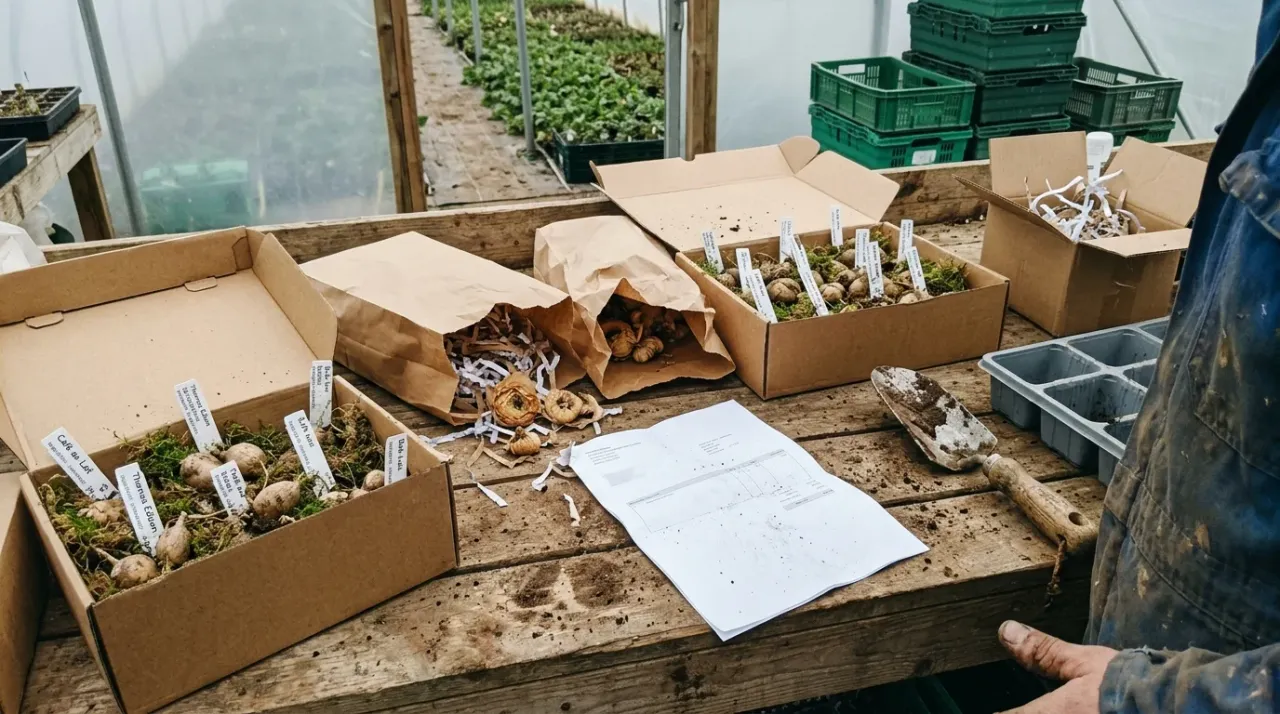
For a flower farm, the date is the part that matters. Every bulb, corm, tuber and plug you buy for the 2027 season, and the autumn bulbs you plant for spring 2028, will come in under today's rules, with today's costs built into the price.
Spring 2028 is the first delivery season that could cross the Channel without the paperwork.
/ 02
What changes
The UK-EU plant trade deal, line by line.
Defra and the Animal and Plant Health Agency published guidance for horticulture businesses on the day of the summit. Here is the plant health side, set against the rules on GOV.UK today.
| Phytosanitary certificates | Needed from the EU exporter for plants and plant products classed as high or medium risk | Not needed for movements to and from the EU |
| Checks | Documentary, identity and physical checks where called, with fees | No border checks; some post-import checks may still apply at the destination |
| Telling the authorities in advance | Pre-notification on IPAFFS for high and medium risk A goods | A new notification system, for a list of high-risk plants only |
| Plant passports | UK plant passports; EU passports not recognised in Great Britain | EU plant passports replace Great Britain ones; UK passports issued before then still valid within Great Britain |
| Plants from outside the EU | Phytosanitary certificates | Still needed |
Sources: Defra and APHA, Horticulture industry: preparing your business for changes (20 November 2026), and GOV.UK, Import plants and plant products from the EU to Great Britain.
The high-risk list is mostly trees, but it includes two plants flower farms grow: lavender and rosemary for planting, along with Prunus such as cherries and plums. Young plants of those from the EU will still be notified before they arrive, even after 2028.
/ 03
The money
What the paperwork costs now.
The government's summit explainer puts the saving from dropping phytosanitary certificates at "around £25 per certificate and at least £127.60 per load in inspection fees". The Horticultural Trades Association estimates that border and compliance requirements cost the sector around £60 million over the last 12 months. It also says the UK imported £794 million of plants and plant material from the EU in 2025, 99% of all UK plant imports, and that UK exports of plants, trees, bulbs and seeds have fallen by nearly 50% since Brexit. That second figure is the other half of the story for growers who sell plants or bulbs abroad.
Most small flower farms never handle a certificate: the importer does. You meet the cost in the price of a sack of tulip bulbs, a box of ranunculus corms or a tray of plugs. Whether suppliers pass the saving on from 2028 is up to each of them, so keep this season's invoices and compare like for like when the time comes.
The certificate never reaches your potting shed. Its cost does, in the price of every sack.
/ 04
Who it affects
Four kinds of flower farm.
The deal touches farms differently, depending on how they buy and sell:
- You buy only from UK suppliers. Nothing to do now. Watch prices from 2028.
- You import directly from the EU. Until March 2028, carry on as now: the GOV.UK rules for your goods' risk category still apply, from a phytosanitary certificate from your EU exporter to pre-notification on IPAFFS.
- You sell plants, plugs or tubers to other businesses. If you issue UK plant passports, you will need authorisation to issue EU ones, and a new label template. Defra says further information will come by spring 2027.
- You grow lavender or rosemary from EU young plants. These stay on the high-risk list, so the new notification will still apply.
The trade body wants some relief sooner. The HTA has asked the government to reduce checks on lower-risk goods before 2028, saying businesses cannot afford to wait. If that happens, it would be the first saving growers see.
/ 05
This winter
Plan 2027 as if nothing has changed.
Three dates to keep, from the government's own pages:
- 20 November 2026. The agreement set out at the UK-EU summit, and Defra's guidance for horticulture published.
- By spring 2027. Further information from Defra on what businesses need to change.
- 1 March 2028. The agreement applies, subject to UK and EU procedures.
For the 2027 season, order as you always would. Work out quantities first, from your beds rather than the catalogue: our guide to how many seeds to buy covers the seed order, and the bulb calculator does tulips, narcissi and more by the crate or the bed. If you are planning tulips for spring 2028, those bulbs arrive next autumn under today's rules too.
It is also a good winter to say plainly what you grow yourself. The UK buys almost all its imported plants from the EU, and the deal will make that trade easier, not harder. Flowers grown and cut on your own farm are a different thing, and our piece on why local flowers are worth more has the words for your stall and website.
/ 06
Questions
What growers ask.
When will plant border checks between the UK and the EU end?
From 1 March 2028, if UK and EU procedures complete as planned. Until then, today's rules on certificates, pre-notification and checks apply.
Will Dutch bulbs get cheaper?
The government says importers will save around £25 per phytosanitary certificate and at least £127.60 per load in inspection fees. Whether that reaches the price you pay depends on each supplier.
Does anything change for my 2027 bulb and seed orders?
No. Bulbs, corms, tubers and plugs that arrive before 1 March 2028 move under the current rules, including the autumn 2027 bulbs for spring 2028.
Will I still need plant passports?
Yes, but EU ones. From 1 March 2028 EU plant passports replace Great Britain plant passports, and businesses that issue passports now will need authorisation for the EU version.
Does the deal cover plants from outside the EU?
No. Regulated plants and plant products from outside the EU will still need phytosanitary certificates.
From the field
Plan 2027 before the catalogues do.
Our free crop planning spreadsheet keeps a seed order beside your crop plan and bed plan. When you outgrow it, BloomOS keeps sowing schedules, successions and bed maps on your phone, free on the Seedling plan.