/ 01
The short answer
Best eucalyptus for cut flowers
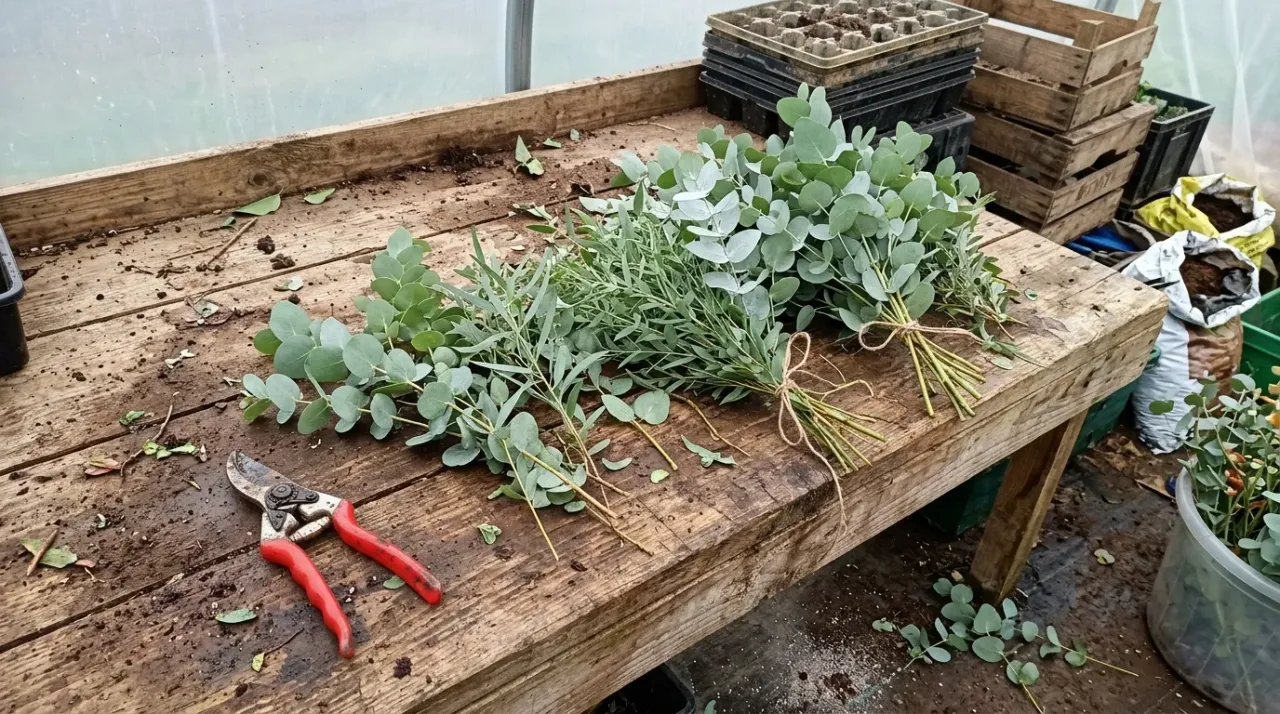
The best eucalyptus for most cut flower growers is Eucalyptus gunnii (cider gum) for its hardiness and fast regrowth, followed by Eucalyptus parvula (small-leaved gum) for its delicate foliage that florists love. If you only have space for one, start with gunnii; it handles British winters and American zone 7 cold without fuss, and you can coppice it hard each spring for armloads of juvenile foliage.
Juvenile foliage is the goal. The round, silvery-blue leaves that sell so well only appear on young growth. Once eucalyptus matures, leaves turn long and sickle-shaped, which is far less useful in arrangements. Coppicing or pollarding keeps the plant producing that marketable juvenile foliage year after year.
"The round, silvery-blue leaves that sell so well only appear on young growth."
Here are the varieties worth considering, ranked by their usefulness on a small cut flower farm:
| E. gunnii (cider gum) | Hardy to -18°C / zone 7 | Round, silvery-blue | Fast | The workhorse; reliable regrowth after coppicing |
| E. parvula (small-leaved gum) | Hardy to -16°C / zone 7 | Tiny, delicate | Moderate | Premium florist favourite; slower to establish |
| E. pulverulenta (baby blue) | Hardy to -10°C / zone 8 | Round, powdery blue | Slow | Spiral stems; stunning but less hardy |
| E. cinerea (argyle apple) | Hardy to -8°C / zone 8 | Round, silver-grey | Moderate | Popular in US; needs protection in UK |
| E. nicholii (narrow-leaved peppermint) | Hardy to -12°C / zone 8 | Fine, weeping | Fast | Good for texture; less traditional look |
Start with two or three varieties to hedge your bets. A single hard winter can take out your less hardy plants, so having gunnii as a backbone means you will still have something to sell.
/ 02
In more detail
What it depends on
The "best" eucalyptus changes depending on your climate, your market and how much space you can spare for a woody perennial. Here are the factors that matter most on a real farm.
Your hardiness zone. In Devon, Cornwall or the Pacific Northwest, you can grow almost any eucalyptus. In Yorkshire, the Midlands, or zone 6 in the US, you are limited to the hardiest options. Gunnii and parvula are the safest bets for cold regions.
What your florists want. Some florists specifically request baby blue (E. pulverulenta) for its spiral stems. Others want the classic round leaves of gunnii. If you are selling at farmers' markets, the silvery-blue colour is what catches the eye; variety names matter less.
Space and patience. Eucalyptus takes two to three years to establish before you can coppice hard. That is ground you cannot use for annuals. On a small plot, you might only have room for a few plants, so choose varieties that give you the most versatile foliage.
How you plan to cut. Coppiced plants stay at waist height and produce many stems from the base. Pollarded plants are cut higher up, keeping the trunk clear. Both work; coppicing gives more stems, pollarding keeps paths clear.
"A single hard winter can take out your less hardy plants, so having gunnii as a backbone means you will still have something to sell."
A worked example. Say you plant ten E. gunnii in year one. By year three, each plant might give you 30 to 50 saleable stems per cut, and you can cut two to three times per season. That is 600 to 1,500 stems per year from ten plants. If you sell bunches of five stems at £4 wholesale, that is £480 to £1,200 from a small planting. These numbers assume good growing conditions, regular watering in the first two years and no major winter losses. Your results will vary with your soil, climate and how hard you coppice.
| Stems per plant per cut | 30 to 50 | , |
| Cuts per season | 2 to 3 | , |
| Total stems per year | , | 600 to 1,500 |
| Stems per bunch | 5 | , |
| Price per bunch (wholesale) | £4 | , |
| Annual revenue | , | £480 to £1,200 |
This is a rough guide, not a promise. Track your actual yields to see what your plants deliver. For more on working out what each crop earns you, see our guide to flower farm profit per acre.
/ 03
On your farm
Keeping track of it in BloomOS
In BloomOS, you can add eucalyptus to your variety library with your own growing notes, then log every cut so you know exactly how many stems each plant gives you over time.
The cut log works one-handed with gloves on, so you can record stems in the field even when your hands are full. Over a season, those logged cuts add up to real data: yield per plant, revenue per variety and your best sellers by month. That takes the guesswork out of deciding whether to plant more gunnii or give parvula another try.
If you are planning where to put new eucalyptus, the bed map in season planning lets you block out space for perennials alongside your annual successions. You will see at a glance how much ground is committed to foliage versus flowers.
/ 04
Questions
Common eucalyptus growing questions
How often can you cut eucalyptus? Most growers cut two to three times per growing season, typically late spring, midsummer and early autumn. After coppicing hard in early spring, give the plant at least six weeks to put on new growth before your first cut. Avoid cutting late in autumn, as soft new growth is vulnerable to frost.
Does eucalyptus need a lot of water? Established eucalyptus is remarkably drought-tolerant, but young plants need regular watering in their first two summers. Once the root system is established, you can largely leave them alone unless you have a prolonged dry spell. Waterlogged soil is more of a problem than dry soil; eucalyptus hates wet feet.
Can you grow eucalyptus in pots for cutting? You can, but yields will be lower and the plant will need more attention. A large container (at least 50 litres) with good drainage can work for a single plant, and it lets you move tender varieties under cover in winter. For serious production, planting in the ground is more practical.
From the field
Run your farm from your phone.
BloomOS logs every cut in the field, even when the signal drops, and turns it into orders, invoices and the numbers behind next season. Free to start, built by a flower farmer.