/ 01
Now
October to December 2026: the bulbs, the conversation, the plan
The work for a 2027 wedding starts now. While the couple are still thinking about venues and guest lists, you're already committing to the flowers that will be in bloom on their day.
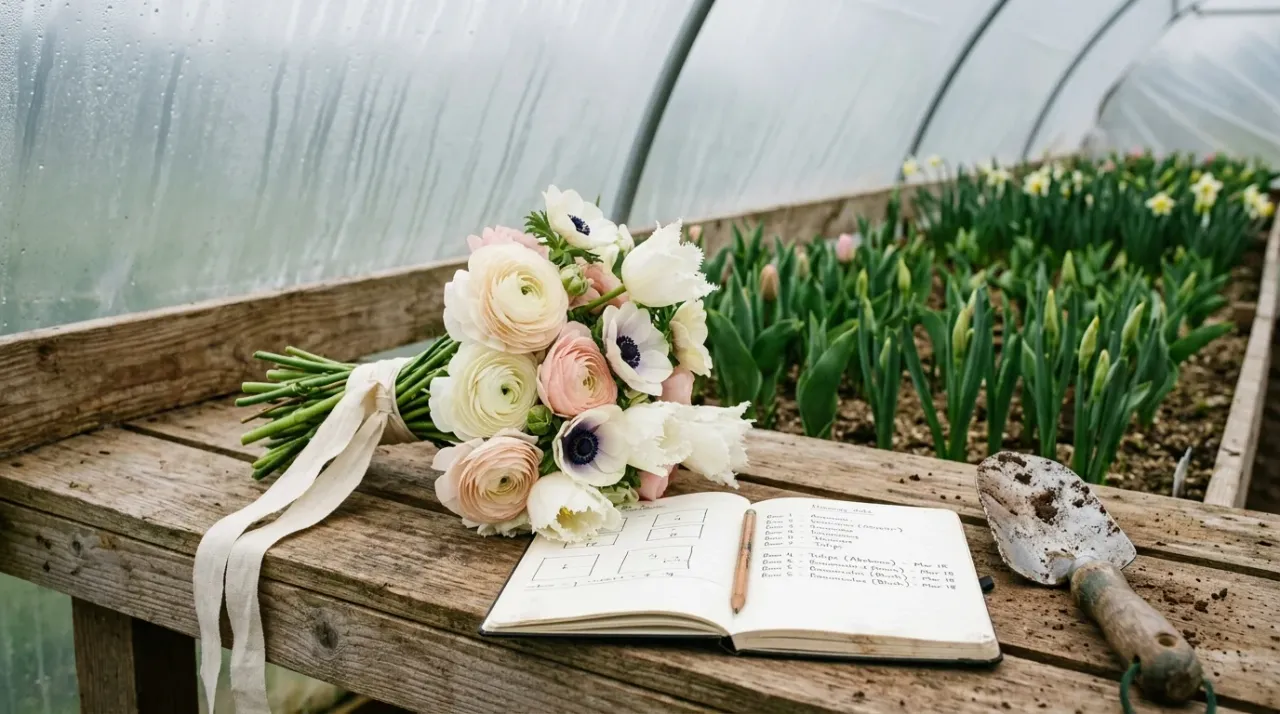
Order spring bulbs before they sell out. Tulips, ranunculus and anemones for April, May and early June weddings need to go in the ground (or the crates) over the coming weeks. The best varieties disappear fast from suppliers, so place your order early. If you're growing ranunculus and anemones in tunnels, you'll want them in by November for late spring blooms.
Have the real conversation with the couple. This isn't about Pinterest boards. You need to understand:
- Their palette: not just colours, but the feeling they want
- Their priorities: is the bridal bouquet everything, or do they care most about the table centrepieces?
- Their flexibility: are they open to seasonal substitutions, or do they have their heart set on peonies regardless?
Map your beds. Where will the wedding stems actually grow? If you're dedicating rows to this booking, mark them now. In BloomOS, you can tag beds by purpose so you know at a glance what's spoken for and what's available for other orders.
The best wedding florists aren't the ones with the biggest range. They're the ones who know exactly what will be at its peak on any given week.
/ 02
Indoor Start
January to March 2027: early sowings and first successions
The new year brings the first real growing work. These months are about getting ahead under cover while the ground is still too cold or wet for direct sowing.
Sow the backbone flowers under cover. Sweet peas, snapdragons and stock all need an early start if they're to bloom for June and July weddings. For succession planting, stagger your sweet pea sowings every two to three weeks so you're not relying on a single flush.
| January | Sow sweet peas (first succession), snapdragons, stock |
| February | Sow cosmos, scabiosa, second sweet pea succession |
| March | Start dahlia tubers in pots, sow zinnia under cover if early wedding |
Start dahlia tubers if you're pot-growing. For July weddings onwards, dahlias are likely to feature. Soft waterlilies such as Sweet Nathalie and neat ball types like Clearview Peachy suit wedding work well. Starting tubers in pots in March gives them a head start before planting out after the last frost. See our guide on how long dahlias last in the vase to help manage couple expectations.
Confirm numbers with the couple. Guest counts shift. Venues change. A February or March check-in catches any changes that affect your quantities before you've committed too many seeds to the ground.
/ 03
Planting Out
April to May 2027: into the ground and refining the list
The risk of hard frost recedes, the soil warms, and everything moves outside. This is when the plan becomes real.
Harden off and plant out your early sowings. Those sweet peas and snapdragons need a proper transition. A week or two in a cold frame or sheltered spot prevents the shock that sets plants back. For frost alerts, BloomOS can notify you if a late cold snap is coming for the beds you've actually planted.
Sow direct annuals. Cornflowers, larkspur, ammi, orlaya and nigella can all go direct into the ground now. These are the airy, natural stems that fill out wedding work without dominating the palette.
- Cornflowers: classic blue, but also white and pale pink varieties
- Larkspur: vertical spikes, excellent for large arrangements
- Ammi majus and Ammi visnaga: the lace that ties everything together
Send a seasonal availability update. By now you have a clearer picture of what's thriving and what's struggling. A quick email to the couple keeps them informed and opens the conversation about substitutions before it's too late. This is also the moment to gently remind them of final payment dates.
/ 04
Month Before
Prep, vessels, and final confirmations
One month out, the growing is largely done. Now it's logistics.
Walk the rows with a critical eye. What's on track? What's behind? What's bolting and will need replacing from another bed or a flower friend? Be honest with yourself. Better to source backup stems now than scramble the week before.
Gather and clean your vessels. If you're supplying vases, urns or bottles:
- Check you have the right quantity
- Clean thoroughly and dry completely
- Label by table or location if needed
Confirm every practical detail. Delivery time. Venue access (which door, where to park, who has the key). Contact details for someone who will actually answer on the day. Write it all down. In BloomOS, you can attach notes and contact details to each order so everything is in one place when you need it.
The week of the wedding is too late to discover the venue has a 7am delivery slot and a locked gate.
/ 05
Week Before
Cutting, conditioning, and last checks
This is the week. Everything you've grown, planned and promised comes together now.
Cut on a rolling schedule. Not everything should be cut the same day. Some stems need longer conditioning; others open too fast if cut early. A rough guide:
| Woody stems (roses, hydrangea) | 3 to 4 days |
| Sweet peas, stock, snapdragons | 2 days |
| Dahlias | 1 day (or morning of) |
| Delicate foliage | 2 to 3 days |
Make personal flowers last. Buttonholes, corsages and hair pieces are best made the night before or the morning of the wedding. Keep them cool and misted.
Pack the van the night before. Buckets, secateurs, wire, tape, cable ties, your invoice, a spare phone charger. Forgetting the wire is a small disaster; forgetting the flowers is a big one. A checklist on the dashboard helps.
/ 06
After
Collect, review, and capture what you learned
The wedding is done. But there's still work that's easy to skip and painful to neglect.
Collect vessels and send the final invoice. If you're owed a balance, invoice the same day while the flowers are still fresh in everyone's memory. BloomOS lets you generate a PDF invoice in one tap and sync it to Xero if that's your setup.
Photograph everything. Before the flowers fade, before you forget, get the portfolio shots. Phone photos are fine. Natural light. No filters. These become your social proof for next year's bookings.
Debrief yourself. What varieties performed? What let you down? What would you grow more of? Record it somewhere you'll actually find next October. In BloomOS, you can add notes to each variety in your library so your future self benefits from what you learned.
Feeding this year's lessons into next year's plan is how wedding flower growing gets easier. You're not starting from scratch; you're building on what worked.
/ 07
Questions
Planning wedding flowers
How far ahead should I start planning for a wedding booking? For spring weddings, you need to be ordering bulbs six to nine months ahead. For summer weddings, the timeline is a little shorter but you still want to be planning successions and bed allocations at least six months out. The earlier you start, the less scrambling you do later.
What if a key flower fails or bolts before the wedding? This is why we walk the rows a month before and build in substitution conversations with couples early. Having relationships with other local growers also helps: a flower swap or emergency purchase is easier when you've already talked to your neighbours.
Should I offer full-service wedding floristry or just supply buckets of stems? That depends on your skills, your time, and your pricing. Supplying buckets is simpler but lower margin. Full-service means more work, more responsibility, and more reward. Many growers start with buckets-only and add design services as they gain confidence. Track your profit per variety either way so you know what's actually paying.
From the field
Run your farm from your phone.
BloomOS logs every cut in the field, even when the signal drops, and turns it into orders, invoices and the numbers behind next season. Free to start, built by a flower farmer.