/ 01
The short answer
Price the bouquet, then the promise.
Here is how to price a flower subscription: work out what one bouquet is worth from the stems in it, add the wrap and the cost of getting it to the customer, then decide how much to take off for paying ahead. The five farm subscriptions we checked this week work out at £25 to £30 a bouquet in the UK and $25 to $44 in the US.
Copy nobody's price, though. A subscription is a promise to deliver flowers every week or month whatever the weather does, so the price has to cover your costs in a thin week as well as a full one.
A bunch at the market is sold once. A subscriber is sold for the season, before you have cut a stem.
/ 02
What farms charge
Five real subscriptions, per bouquet.
Here is what four flower farms publish on their own websites, divided out per bouquet. US farms often call a subscription a flower CSA or a flower share; it is the same idea.
| The Leicestershire Flower Farm, UK | Monthly, April to October, plus a festive bouquet in December | 8 | £240 | £30 |
| Farndon Flower Farm, UK, Tulip Club | Weekly in April 2027, 12 or more speciality tulips each | 4 | £100 | £25 |
| Blue Sky Flower Farm, Minnesota, Spring Share | Weekly, mid-April to mid-May, 15 to 25 stems | 4 | $100 | $25 |
| Fox Meadow Flower Farm, Maine, Spring or Peony Share | Weekly for four weeks | 4 | $175 | about $44 |
| Fox Meadow Flower Farm, Late Summer and Fall Share | Weekly, 18 August to 22 September 2026 | 6 | $260 | about $43 |
A few patterns are worth borrowing:
- Short clubs around one crop. Farndon's Tulip Club and Fox Meadow's Peony Share sell four weeks of the flower people wait all year for.
- A cap. Farndon limits its Tulip Club to 50 places and says it grows specifically for subscribers.
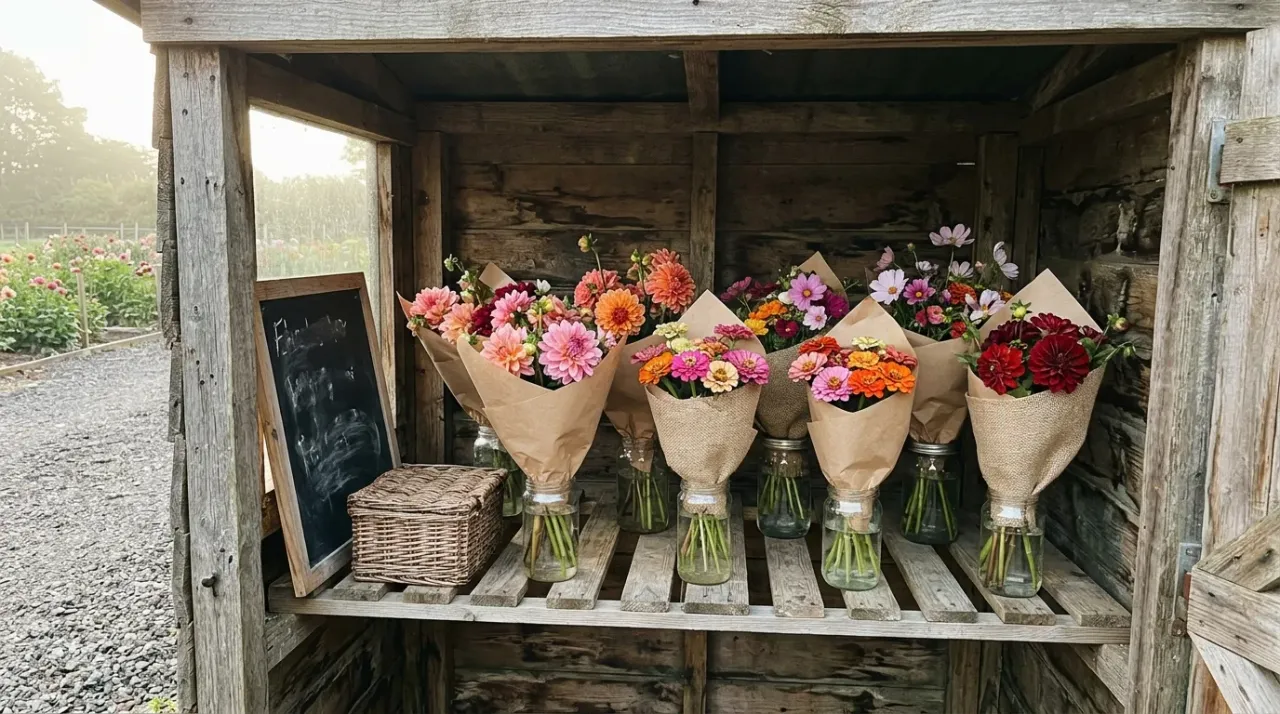
- Collection points. Blue Sky's bouquets wait in a self-serve farm stand or at a brewery on Thursday afternoons. Farndon uses its flower shed and a local coffee shop, and charges £5 a bouquet to deliver outside its free area.
- A discount, said out loud. Cross Street Flower Farm in the US prices its shares 10 to 20% below its own shop bouquets.
- Sold in winter. Cross Street's 2027 shares are already on sale, and Fox Meadow says its subscriptions help pay winter costs such as seed, plugs and compost.
/ 03
The sum
How to price a flower subscription, step by step.
Start from a price per stem, the same way our guide to pricing cut flowers does for bunches and buckets. Then add what a subscription costs you that a market bunch doesn't.
| 20 stems at an average of 75p, your own retail stem price | £15.00 |
| Wrap, label and a sachet of flower food | £1.00 |
| Design and wrapping, 6 minutes at £15 an hour | £1.50 |
| Delivery: a two-hour round of 12 drops costing £30 in time and fuel | £2.50 |
| Price per delivery | £20.00 |
| A season of 8 deliveries | £160 |
| Less 10% for paying the whole season ahead | £144, or £18 a delivery |
Change any line to your own numbers. If you don't know your stem price yet, the stem price calculator works it out from your costs, and our guide to how many stems go in a bunch helps you set the stem count.
If your sum comes out well below what farms near you charge, look again at your stem price before you undercut them. A subscription bouquet is cut, designed, wrapped and delivered to order, which is worth more than a bunch on a stall.
Paying ahead helps you more than it helps your subscriber. That is what the discount is for.
/ 04
Size and season
How many subscribers can you grow for?
The second sum is about stems, not money. Multiply subscribers by stems per bouquet and you have the stems you must cut in every delivery week, on top of everything else you sell. Twenty subscribers at 20 stems is 400 stems a week, every week, including the week the wind flattens the cosmos.
So start small. Pick a season you can fill with confidence: a spring tulip club, a four-week peony share or a late summer run when the zinnias and dahlias are in full flow. Cap the numbers, and keep a waiting list rather than a promise you can't keep. Our flower subscriptions page has a calculator for what a season of subscribers brings in.
/ 05
The small print
Write the rules before you sell.
The farms in our table answer the same questions on their own pages, and they are worth deciding before the first payment arrives:
- Start date. Say it depends on the flowers. Farndon tells its Tulip Club members it will contact them in advance to confirm the first week.
- Missed collections. Blue Sky can't hold or replace a missed bouquet and suggests passing it to a friend. Farndon will hold one for an extra day with 48 hours' notice.
- What is in the bouquet. Give a stem range rather than a list. Blue Sky promises 15 to 25 stems; Farndon promises 12 or more tulips with foliage.
- Delivery area. Name the postcodes or towns, and the charge outside them.
- Gifts. Several of these farms sell subscriptions as presents, so ask for the recipient's details at checkout.
In BloomOS you set a subscription up once: how often, the delivery day, the stems and the price. It books the next eight deliveries as orders and tops them up as each one goes, so the week's orders are waiting without any retyping.
/ 06
Questions
What growers ask.
How much should a flower subscription cost?
Build it from your own stem price, wrap and delivery. The five farm subscriptions we checked work out at £25 to £30 a bouquet in the UK and $25 to $44 in the US.
Should subscribers get a discount?
A small one is fair, because they pay before you have cut a stem. Cross Street Flower Farm prices its shares 10 to 20% below its shop bouquets.
When should I sell flower subscriptions?
In winter. Some farms already sell next season's subscriptions in November, and the money arrives when the seed and plug orders are due.
How many stems go in a subscription bouquet?
Blue Sky Flower Farm's spring bouquets have 15 to 25 stems, and Farndon's Tulip Club bouquets have 12 or more tulips with foliage. Decide your stem count before you set the price.
What is a flower CSA?
It is the US name for a flower subscription. CSA stands for community supported agriculture: customers pay for a share of the season in advance and collect a bouquet each week.
From the field
Set each subscription up once.
BloomOS books the next eight deliveries of every subscription as orders and tops them up as each one goes, and any order becomes an invoice with one tap. Founding farms use it free for life.