/ 01
The short answer
Best lilies for cut flowers
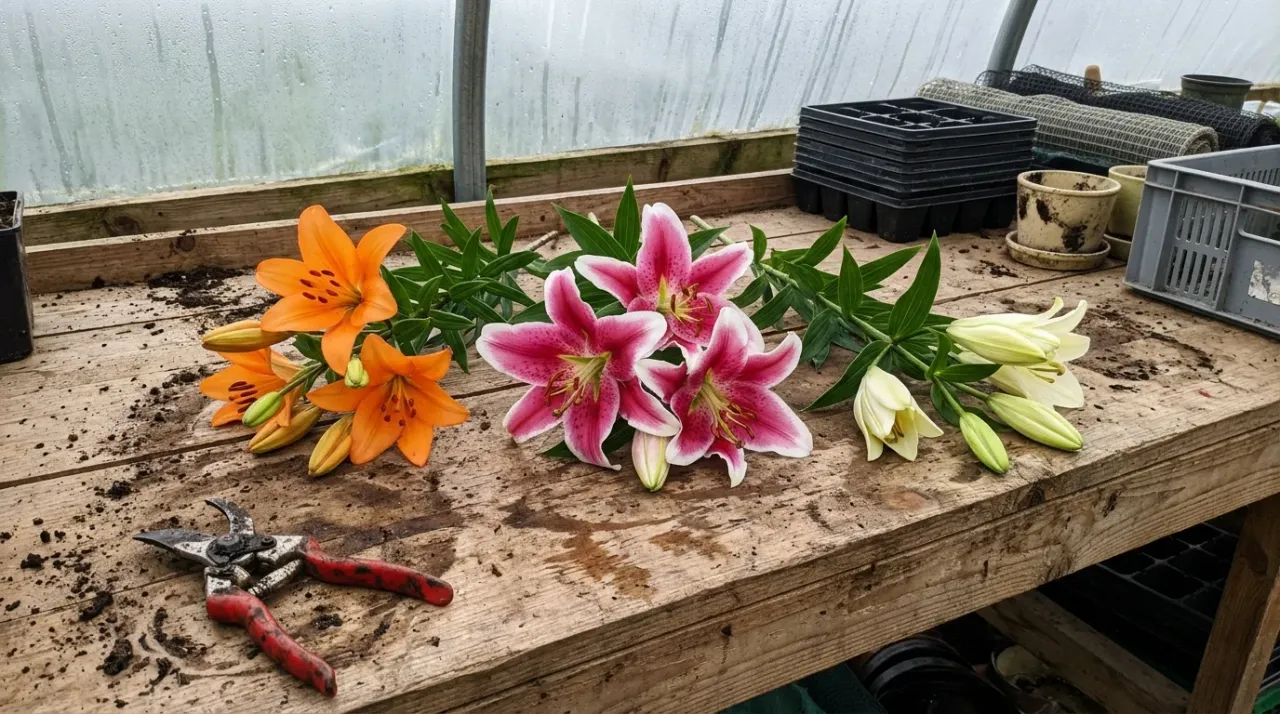
The best lilies for cut flowers are Asiatic lilies for speed and ease, Oriental lilies for scent and statement blooms, and LA hybrids for the best of both. If you are growing to sell, Asiatics give you the fastest return; if you want premium florist stems, Orientals command higher prices but take longer to flower and need more space.
Asiatic lilies bloom 60 to 90 days from planting, come in almost every colour except blue, and have no fragrance. That last point matters: some customers love scent, others cannot have it in a bedroom or restaurant. Oriental lilies take 90 to 120 days, produce larger flowers with that unmistakable perfume, and last well in the vase. LA hybrids (Longiflorum crossed with Asiatic) sit in the middle: good scent, sturdy stems, and a harvest window closer to Asiatics than Orientals.
Asiatics are the workhorse; Orientals are the showpiece. Most small farms grow both.
For a typical small cut flower farm selling at markets and to florists, a mix weighted towards Asiatics (around 60 per cent of your lily planting) with LA hybrids and Orientals making up the rest gives you stems from early summer into autumn without betting everything on one type.
/ 02
In more detail
What it depends on
The honest answer is that the "best" lily changes depending on your climate, your sales channels and your space. Here is what shifts the balance on a real farm.
Vase life and reliability. Asiatics and LA hybrids consistently give 10 to 14 days in the vase when cut at the right stage (first bud showing colour). Orientals can match that, but they bruise more easily in transport. If you are delivering to florists who re-condition stems, Orientals work beautifully. If you are selling at a roadside stand, Asiatics travel better.
Scent preferences. Some customers will only buy scented lilies; others actively avoid them. Knowing your market matters more than any variety guide. If you sell mainly to event florists, ask what they want before you plant.
Planting density and yield. Lilies are bulky compared to dahlias or ranunculus. Most growers plant at 15 to 20 cm spacing in beds, which means fewer stems per square metre than many other crops. The payoff is that each stem often carries three to five blooms.
| Variety type | Asiatic | Oriental |
| Bulbs planted (1.2 m × 10 m bed) | 300 | 240 |
| Marketable stems (assume 85%) | 255 | 204 |
| Average price per stem (florist) | £1.80 | £2.80 |
| Gross revenue | £459 | £571 |
| Days to first cut | 75 | 105 |
Assumptions: 15 cm spacing for Asiatics, 20 cm for Orientals; prices based on UK florist wholesale in 2024; 15 per cent loss to disease, pests or unmarketable stems.
The table shows Orientals earning more per bed, but they tie up that space for a month longer. If you have limited beds and want to follow lilies with a late dahlia succession, Asiatics free up the ground sooner.
Colour and market trends. Soft apricots, creamy whites and dusky pinks move fastest for weddings. Hot oranges and reds sell well at farmers' markets. If you are unsure, plant a spread and track what actually sells. That data is worth more than any trend forecast.
The variety that earns best on your farm is the one your customers keep asking for.
Overwintering and perenniality. Asiatics are the hardiest; most will overwinter in the ground in the UK and much of the US (USDA zones 3 to 8). Orientals prefer milder conditions and may need lifting in cold, wet areas. LA hybrids sit between the two. If you want lilies that come back without replanting, Asiatics are your safest bet.
/ 03
On your farm
Keeping track of it in BloomOS
BloomOS keeps your lily data in one place so you can answer "which variety earned best" at the end of the season. In the variety library you can add growing notes for each lily, including spacing, days to maturity and any quirks you have noticed. When you log cuts, those numbers feed into profit per variety and yield per bed reports, so next year's planting decisions are based on what actually happened, not what the catalogue promised.
Practical features for lily growers:
- Cut log works one-handed with gloves on, so you can record stems as you move down the row.
- Succession planning lets you stagger plantings if you are using the same variety over several weeks. See our guide on succession planting for cut flowers for the detail.
- Best sellers by month shows whether your Asiatics are outselling your Orientals in July, so you can adjust next year's order.
- Frost alerts warn you when a late cold snap might catch emerging shoots.
If you are still using a spreadsheet, our free crop planning spreadsheet is a good stepping stone. When you are ready to move everything into one system, the founding-farm beta is open at /founding-farmers.
/ 04
Questions
Lily FAQs for growers
How long do cut lilies last in the vase? Most lilies last 10 to 14 days when cut at the right stage and kept in clean water with flower food. Removing the anthers (the pollen-bearing tips) prevents staining and can extend vase life by a day or two. Orientals and LA hybrids sometimes last a little longer than Asiatics if handled gently.
When should I cut lilies for the best vase life? Cut when the first bud on the stem is showing colour but has not yet opened. The remaining buds will open in sequence over the following days, giving your customer the longest possible display. Cutting too early means buds may not open; cutting too late shortens vase life and increases pollen mess.
Can I grow lilies profitably on a small flower farm? Yes, lilies can be profitable, though they need more space per stem than many other crops. The worked example above shows a 10 m bed of Asiatics grossing around £459, or roughly £38 per square metre. That compares well with many annuals, especially when you factor in that bulbs can return for several seasons. The key is matching your variety choice to your market and tracking actual sales so you know which colours and types earn their space.
From the field
Run your farm from your phone.
BloomOS logs every cut in the field, even when the signal drops, and turns it into orders, invoices and the numbers behind next season. Free to start, built by a flower farmer.