/ 01
The short answer
Best eucalyptus for cut flowers
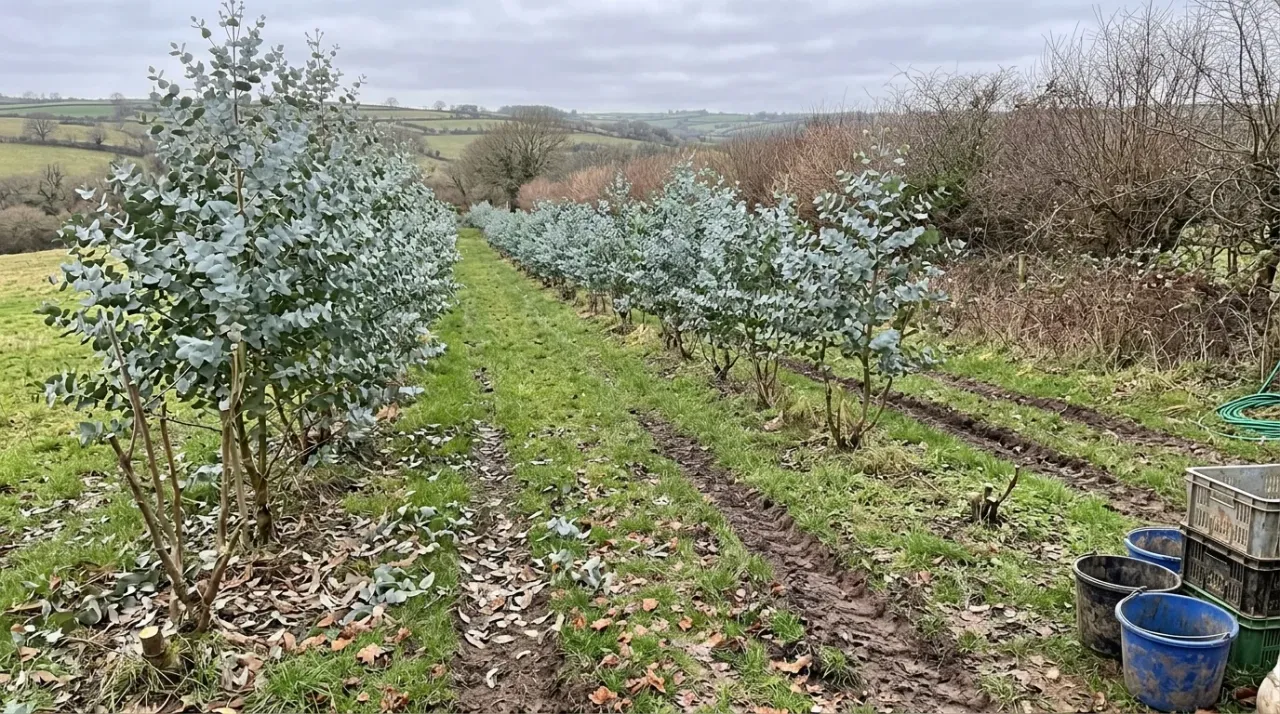
The best eucalyptus for cut flowers is Eucalyptus gunnii (cider gum) for most small-scale growers, with Eucalyptus cinerea (silver dollar) close behind if you sell to florists who want that classic round-leaf look. Both are hardy enough for UK and US growing, coppice well, and give you foliage within two years of planting.
That said, the real answer depends on your market, your climate and how you plan to manage the plants. If you are selling at farmers' markets, gunnii's silvery juvenile foliage works beautifully in mixed bunches. If florists are your main outlet, they may specifically request cinerea or Eucalyptus pulverulenta (baby blue) for wedding work. And if you are in a colder area, hardiness matters more than aesthetics.
Eucalyptus is one of the few foliages that pays its way year after year once established.
Here is a quick comparison of the varieties you will see most often on cut flower farms:
| E. gunnii (cider gum) | Round to oval | H5, to -15°C | Fast-growing, reliable coppicing, most forgiving |
| E. cinerea (silver dollar) | Round, paired | H4, to -10°C | Classic florist favourite, slower than gunnii |
| E. pulverulenta (baby blue) | Round, clustered | H4, to -10°C | Compact growth, excellent vase life |
| E. parvula (small-leaved gum) | Small, narrow | H5, to -15°C | Hardy, good filler foliage |
| E. nicholii (willow-leaved gum) | Long, narrow | H4, to -10°C | Different texture, pairs well with dahlias |
/ 02
In more detail
What it depends on
The right eucalyptus for your farm comes down to three things: what your customers actually buy, how cold your winters get, and how much space you can give to plants that stay in the ground for years.
Market fit matters most. If you sell ready-made bouquets at a farmers' market, any silvery eucalyptus will work because you control the design. If you supply florists, ask them what they want before you plant. Many florists have strong preferences, and cinerea or baby blue often appear on their wish lists because that is what they see in wholesaler catalogues. Gunnii is more forgiving to grow but less familiar to some florists.
Hardiness is non-negotiable. Eucalyptus are not as tender as people assume, but a bad winter will still kill young plants or unprotected cinerea in exposed spots. In USDA zones 7 and below, or in frost pockets anywhere in the UK, stick with gunnii or parvula for your main planting. You can trial cinerea in a sheltered corner, but do not bet the farm on it.
Space and management shape your yield. Eucalyptus grown for cut foliage is usually coppiced or pollarded to keep the plants producing juvenile foliage, which is what florists want. This means cutting hard each year and letting regrowth happen. A single plant can give you 30 to 50 usable stems per year once established, but only if you manage it properly.
A worked example with real numbers: Suppose you plant 20 gunnii in a 10m row, spacing them 50cm apart. You lose two in the first winter. After year two, the remaining 18 plants each give you 40 stems per year when coppiced in late winter. That is 720 stems annually from one short row. If you sell bunches of five stems for £4 (a conservative price for farmers' market foliage), that row earns £576 per year for the next decade or more. These numbers assume you are in a reasonably mild area, coppicing consistently, and selling everything you cut.
The maths on eucalyptus only works if you have an outlet. Do not plant 50 trees and then look for buyers.
Planting and establishment tips:
- Buy small plants (9cm or 1-litre pots) rather than large specimens. They establish faster and are far cheaper.
- Plant in spring after the last hard frosts, or in early autumn with fleece protection for the first winter.
- Stake young plants. Eucalyptus are top-heavy and will blow over.
- Mulch well but keep mulch away from the stem to prevent rot.
- Do not coppice until year two at the earliest. Let the roots establish first.
When to cut and how to condition: Cut eucalyptus in the morning when stems are turgid. Strip lower leaves, bash the stem ends with a hammer or make a vertical slit, and stand in deep water for at least four hours before arranging. Vase life is excellent, often two weeks or more, which makes it a reliable florist favourite.
/ 03
On your farm
Keeping track of it in BloomOS
In BloomOS, eucalyptus lives in your variety library alongside your annuals. You can add growing notes, record your cost per plant, and track yield per bed over the years. Because eucalyptus is a perennial crop, you will not be succession planting it, but you can still use the cut log to record what you take from each row and see your profit per variety at the end of the season. If you are planning your foliage offering alongside your flowers, the season planner helps you see what will be ready when, so you know whether you need to buy in eucalyptus while your own plants establish.
/ 04
Questions
Eucalyptus growing FAQs
Can I grow eucalyptus in pots for cutting? You can, but yield will be much lower and you will need to water constantly in summer. Eucalyptus has vigorous roots and does not enjoy being constrained. For a few stems for your own designs, a large pot works fine; for serious production, plant in the ground.
How long until I can cut from new eucalyptus plants? Most growers wait until the second year after planting before coppicing and cutting. In the first year, let the plant establish its root system. By year three you should be getting reliable annual cuts from each plant.
Is eucalyptus worth growing on a small flower farm? Yes, if you have the space and the market. Eucalyptus is one of the few foliages that genuinely pays its way, with minimal ongoing work once established. The main risk is overplanting before you have buyers lined up. Start with 10 to 20 plants, find your market, and expand from there.
From the field
Run your farm from your phone.
BloomOS logs every cut in the field, even when the signal drops, and turns it into orders, invoices and the numbers behind next season. Free to start, built by a flower farmer.